

Faltering Monsoon Is Central to the Pulse Outlook
For pulse markets, few things matter more than the Indian monsoon and this year’s version has been erratic. June rainfall came in well below average, and while a burst of heavier rain in late June and early July briefly narrowed the gap, volumes dropped off sharply again right in the middle of the main planting window. Rainfall amounts picked up again in late July, but the cumulative monsoon rainfall is still running 16% below the long-term average. There’s still a lot of monsoon season left, but the longer the shortfall persists, the more it matters for both of India’s pulse crops — the kharif crop being seeded now and the rabi crop that follows this winter.
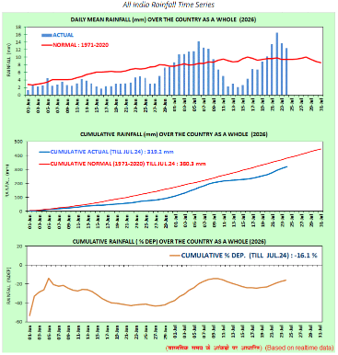
The uneven rains are showing up clearly in seeding progress. Indian farmers picked up the pace when moisture improved, but the most recent weekly data still show planting of tur (pigeon peas) 11% behind last year and 10% below the average pace. Some of that ground can still be made up, but the planting window is in its later stages. Tur is the kharif pulse that matters most for Canadian growers, as imported green lentils can be used as a substitute.
India is a large country, and it’s also important where the rains are (or are not) falling. In the five main tur-producing states, monsoon rains since June 1 range from 1% above the long-term average to 35% below average, so the situation is hardly uniform.
The monsoon’s influence doesn’t end with the kharif crop; those same rains recharge the soil moisture that support the winter rabi crop, which includes chickpeas, lentils and peas, even more important to Canadian farmers. A deficient monsoon, especially later in the season, would raise the stakes for rabi plantings this fall, stretching the supply question across both halves of India’s pulse production.
So far, Indian markets have given a mixed response. Desi chickpea prices moved up off their earlier lows in a couple of stages and are now their highest since early 2025, with solid upward momentum. Tur prices, somewhat surprisingly, haven’t shown a meaningful reaction yet, and yellow pea and red lentil values have been similarly quiet. That muted response likely reflects the comfortable supplies India has carried into this season but if the rains don’t improve, a sharper price response should be expected.
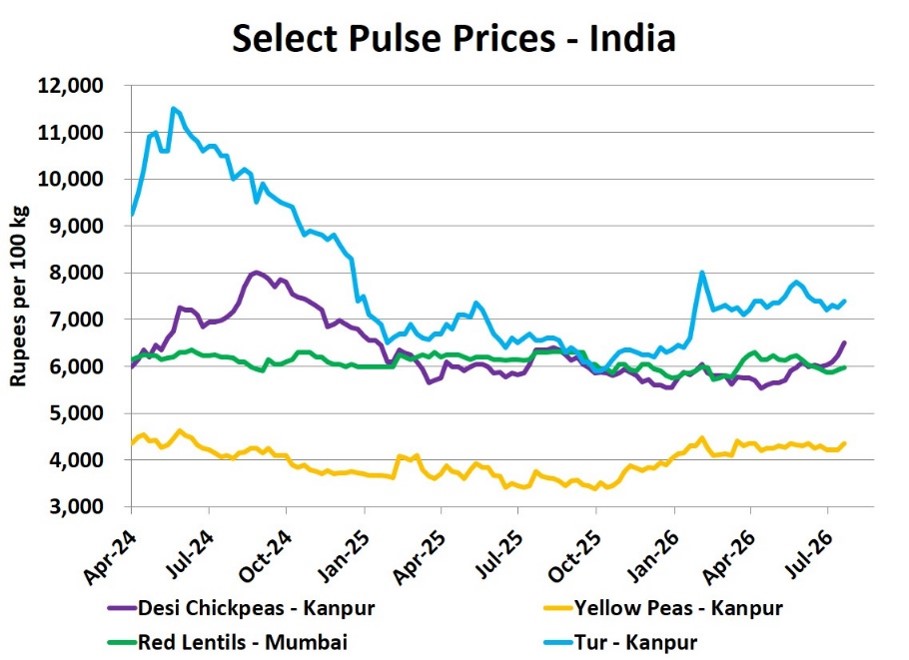
While it’s still too early to write off India’s kharif or rabi crops, there are several possible trade implications for Canadian pulses. India’s imports of green lentils can vary quite a bit from year to year, but a smaller tur crop would add another layer of demand and provide some relief for burdensome supplies. For other pulses, particularly red lentils and yellow peas, the trade response would likely occur later once the rabi crop outlook becomes clearer late in 2026. If the late monsoons in August and September remain deficient, the rabi crop will face large challenges. Depending on the severity, the Indian government could decide to lower its tariffs on pea and lentil imports, currently at 30% and 10% respectively, which would spur further imports.
None of this is locked in. Monsoons have recovered in the second half of the season before, and a strong finish to the rains would take much of this risk off the table. But a key factor for pulse markets — fewer western Canadian acres — now has a faltering monsoon added to the outlook. Prices in western Canada haven’t responded yet, but patience remains a sensible marketing stance.
Pulse Market Insight provides market commentary from Chuck Penner of LeftField Commodity Research to help with pulse marketing decisions.