

Mixed Results for India’s Early Rabi Planting
The crop situation in India is central for pulses. Outcomes in that country have big implications for Indian import demand and, by direct extension, Canadian export prospects. As a reminder, there are two main pulse crops in India, the kharif season which has just wrapped up and the rabi season which is getting underway. Each season affects different pulse crops.
The main kharif pulse crop of interest to Canadian farmers is tur or pigeon peas. While Canadian farmers don’t grow pigeon peas, Indian buyers frequently use split green lentils as a substitute when local tur supplies are low, and that is certainly the case in 2026. Poor monsoon rains reduced the size of India’s pigeon pea crop and this has already improved demand for green lentils from Canada and elsewhere. That’s certainly welcome news, given the large supplies sitting in western Canada.
The rabi pulse crop in India is much larger than kharif production and is more directly connected to Canadian pulses. The dry conditions that reduced India’s kharif crops have now extended into the rabi season. So far, it looks like lack of soil moisture is discouraging Indian farmers from planting certain crops, especially the more moisture-intensive ones like wheat and rapeseed. For pulse crops, the early planting reports are showing mixed results.
Normally, close to 25 mln acres are planted to gram or chickpeas (mostly desi types) in India during the rabi season. So far in the 2026/27 season, gram planting is slow, trailing last year by 17% and the 5-year average by 22%. The pace could pick up in the coming weeks but if not, the combination of reduced acreage and dry conditions could mean the upcoming crop could take a significant hit.
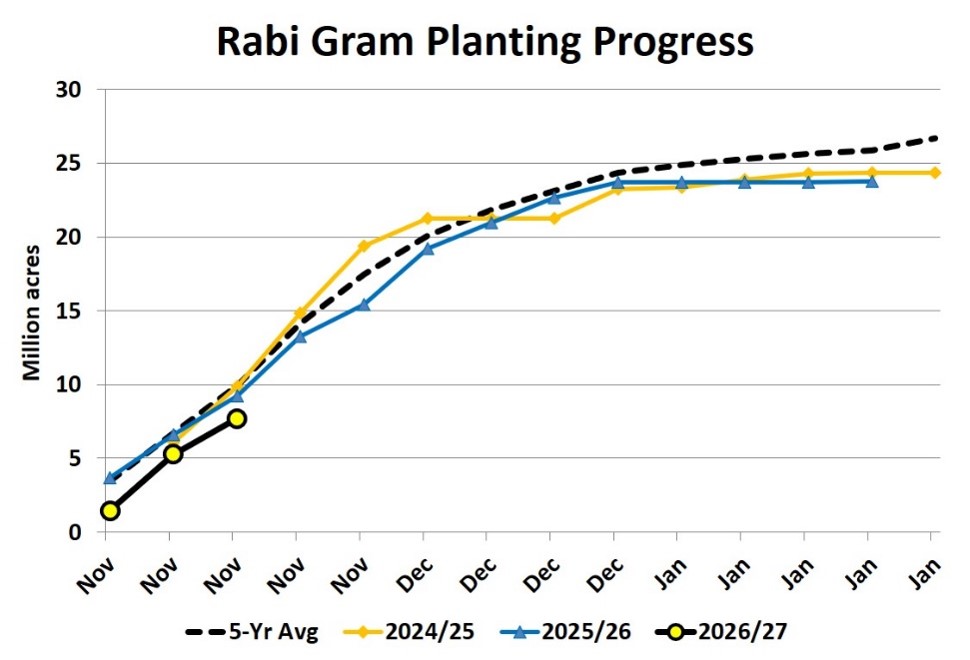
Because gram is the dominant pulse consumed in India, its availability has a large influence on all other pulse markets. One of the big spillover effects from India’s gram production is its yellow pea import requirements, which directly affects the Canadian market. India’s own pea production, with over two mln acres normally planted during the rabi season, is also important and its planting pace is similarly delayed, 18% below average. If both the gram and pea crops in India are reduced, much stronger import demand for yellow peas is likely, especially in the second half of 2026/27.
The one exception in India’s slow rabi pulse planting is lentils, possibly because the Indian government issued a large increase to its Minimum Support Price for the crop. In recent years, Indian farmers have planted 4.0-4.5 mln acres of lentils and after a slow start this year, the pace is now running ahead of a year ago and the average, up 12% and 13% respectively. If this stronger start holds up, the larger acreage base could help offset possible yield reductions caused by dry conditions.
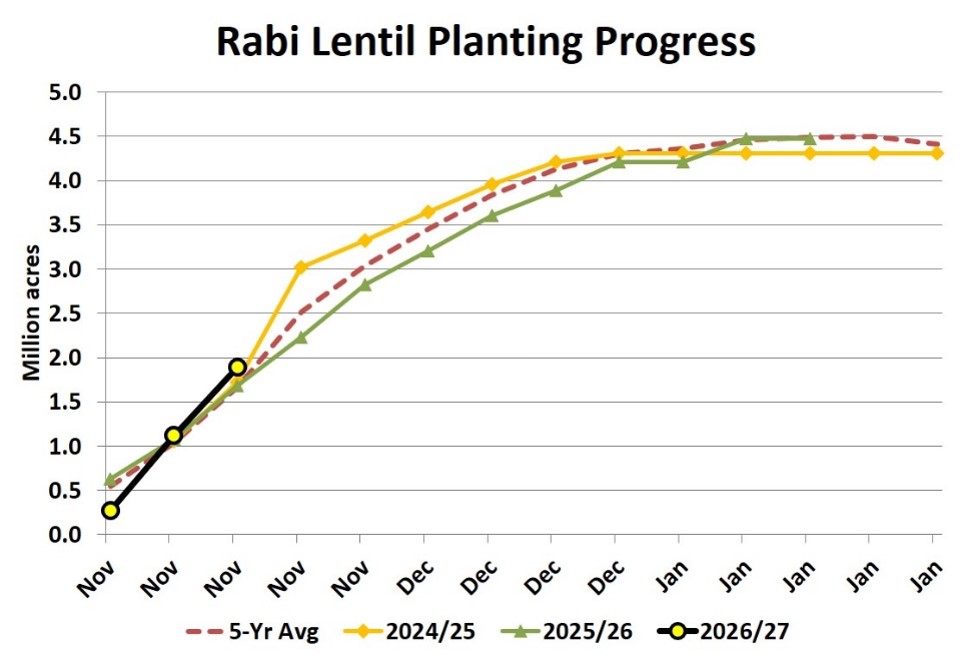
The Canadian red lentil market is already facing headwinds from a record Australian crop about to be harvested. If the Indian crop manages to avoid a drop in production, Canadian lentils will need to work harder to find a home, a clear risk for the rest of 2026/27.
Canadian bids for various pulses are shifting, partly in response to the developing situation in India. Yellow pea prices are strengthening due to increased purchases from India (and China) and are close to parity with green peas (which aren’t really affected by India). Prices for green and red lentils have come off the harvest lows, but greens have shown more strength and could continue to widen their advantage over reds.
Pulse Market Insight provides market commentary from Chuck Penner of LeftField Commodity Research to help with pulse marketing decisions.