

Monsoon Shortfall Makes India the Market to Watch for Peas and Lentils
For Canadian pea and lentil markets, no single buyer matters more in 2026/27 than India, and developments there keep pointing in a friendly direction. This year’s southwest monsoon ended roughly 15% below normal, with the shortfalls concentrated in the southern half of the country where most of the tur (pigeon pea) crop is grown. The kharif harvest is getting underway this month and poor results are widely expected. For Alberta growers, the question is how that crop damage translates into import demand for peas and lentils, and on what timeline.
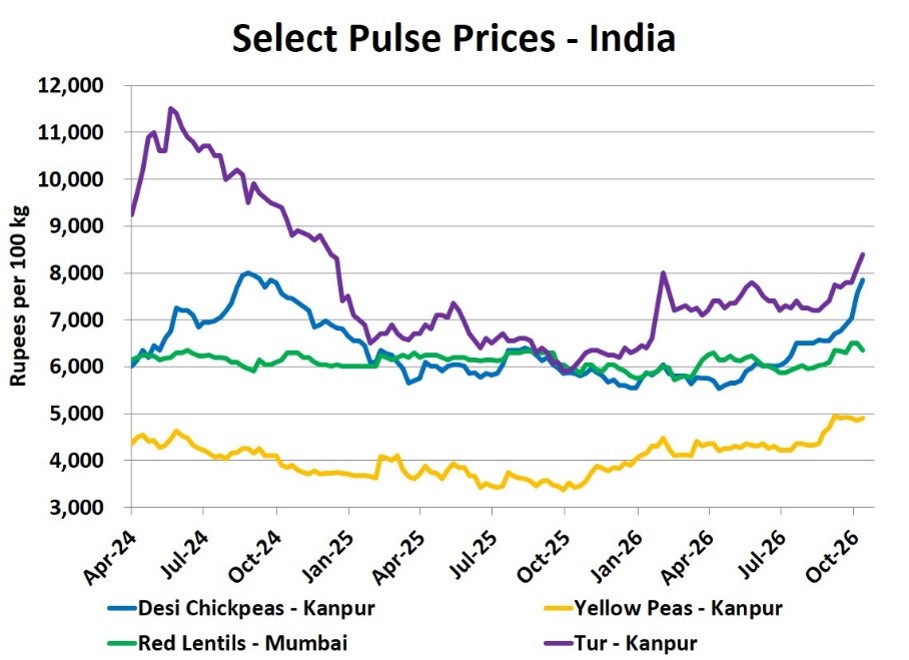
Because it’s a kharif crop, the tur harvest is where the damage shows up first. Prices for tur have rallied over US$230 per tonne from the early July low and now sit at their highest point since August 2024. Because green lentils are the main substitute for tur, Indian buyers are already backfilling with imports, and prices for Canadian green lentils in India are at their highest in a year. Even red lentils, stuck in a sideways channel for years, are starting to show signs of strengthening.
The import data for India shows demand has already been strong, even before the monsoon deficit was felt. Indian lentil imports reached 187,100 tonnes in July, the biggest month since February and roughly three times the normal July volume. Four months into India’s 2026/27 marketing year, cumulative lentil imports of 578,000 tonnes are running at a record pace and more than triple last year’s start. That’s especially notable because imports tend to be quiet at that time of year, following the rabi harvest. The Indian government is also signaling it wants more domestic lentil production, raising its lentil support price, but plantings have plateaued in recent years and policy alone is unlikely to close the gap.
The pea story runs on a parallel track. Indian pea imports totalled 525,000 tonnes through the first four months of 2026/27, almost double last year, and that is with a 30% import tariff still in place. Yellow pea prices in India moved higher earlier on concerns about access to Russian supplies, and prices for desi chickpeas, the domestic substitute for yellow peas, are now rising sharply. If pulse prices continue to rise, it’s also possible that India could cut its 30% pea tariff or the 10% lentil tariff, which would raise demand further.

The cautions are worth keeping in view. The rabi season, with planting about to start and harvest in Feb-Apr 2027, is the bigger factor for red lentil and pea demand. The main pea and lentil growing regions of India were less affected by the monsoon shortfall, so a decent winter crop is still possible, with El Niño the wildcard. This also means that pea and lentil prices in India may only respond in a bigger way once the rabi harvest is closer to determined. Australia is also heading for a record red lentil crop on top of a large carryover, which will temper how far global red lentil prices can run. And Canadian supplies are not short: green lentil supplies remain in record territory, weighted toward small greens.
Bids in western Canada have already strengthened this fall, with green lentils leading, and the seasonal pattern says the rally is still in its early stages. The green lentil strength is here now, built on tur substitution that is already showing up in trade data, so rewarding rallies with incremental sales makes sense, particularly for small greens where old-crop supplies weigh heaviest. For red lentils and yellow peas, the bigger demand response is further out, tied to the rabi crop and possible tariff relief over the winter, which argues for patience with those tonnes while watching India’s planting progress closely.
Pulse Market Insight provides market commentary from Chuck Penner of LeftField Commodity Research to help with pulse marketing decisions.