

Another Headwind for Yellow Peas
The first quarter of the 2025/26 marketing year is now over and the pea market’s performance can be described as good, considering China’s 100% tariffs on Canadian pea imports, but not great. According to the CGC, farmers’ pea deliveries through 13 weeks were 1.13 mln tonnes, below the 5-year average of 1.21 mln and last year at 1.37 mln tonnes. Licensed pea exports totaled 865,000 tonnes, slightly above the 5-year average of 855,000, but trailing last year’s strong pace of 1.05 mln tonnes.
In a “normal” year, this movement of peas wouldn’t be a big concern but the 2025 pea crop is nearly a million tonnes larger than last year, including 700,000 tonnes more yellow peas. Canada needs to export more peas, not less, in 2025/26 to avoid a large buildup in ending stocks. Unfortunately, the Indian government’s recent announcement of a 30% import tariff on yellow peas (from all origins), effective November 1, won’t help the situation.
Several months ago, India announced the 0% import tariffs would remain in effect until March 31, 2026 but backtracked now in an effort to support domestic pea prices ahead of the rabi planting season. This wasn’t a total surprise, as pulse traders and farmers had been pressuring the government as pea prices in India continued to slide. The Indian government has a long history of using tariffs, tonnage limits and minimum support prices to influence prices.
These new 30% tariffs on yellow peas (green pea imports have been restricted for years) will have two effects on the Canadian market – export volumes and prices. Canada already exported a large amount of peas to India (and other destinations) this fall, helping offset the loss of China as a customer. Export volumes normally drop off after October, so these Indian tariffs starting in November will have less impact (at least for this year) than if they had happened a few months ago.
Some Indian traders have suggested Indian pea imports will actually increase because the tariff announcement has removed uncertainty from the marketplace. We have our doubts, but even if that’s the case, the tariffs will have a negative impact on Canadian yellow pea prices. It’s still early, but the tariffs had the desired effect on Indian pea prices, which are up US$30 per tonne since the announcement. That’s good, but it’s only a 7-8% increase, which is just a portion of the tariff, leaving 22-23% to be made up somewhere else.
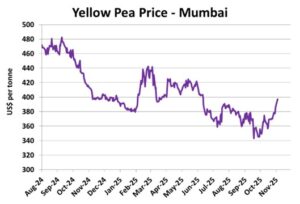
Part of that “somewhere else” could come from thinner traders’ margins, but we expect the lion’s share will show up in lower bids to Canadian farmers. Yellow pea bids had been recovering recently from the harvest lows but right after India’s tariff announcement, some buyers dropped bids by 50-60 cents per bushel. Prices recovered fairly quickly from that initial reaction but only partially, with the average yellow pea bid in western Canada still down 18 cents per bushel or C$6.60 per tonne.

The bottom line is that while these tariffs won’t completely slam the door on yellow pea exports to India, volumes could suffer, especially if Russian traders are more willing to discount their peas to make a sale. For Canadian yellow peas, export sales will be done at reduced prices to absorb a portion of the tariffs and most of that will flow back as lower farmer bids. Another unwelcome challenge for 2025/26 pea markets.
Pulse Market Insight provides market commentary from Chuck Penner of LeftField Commodity Research to help with pulse marketing decisions.