
Contact

Chickpeas

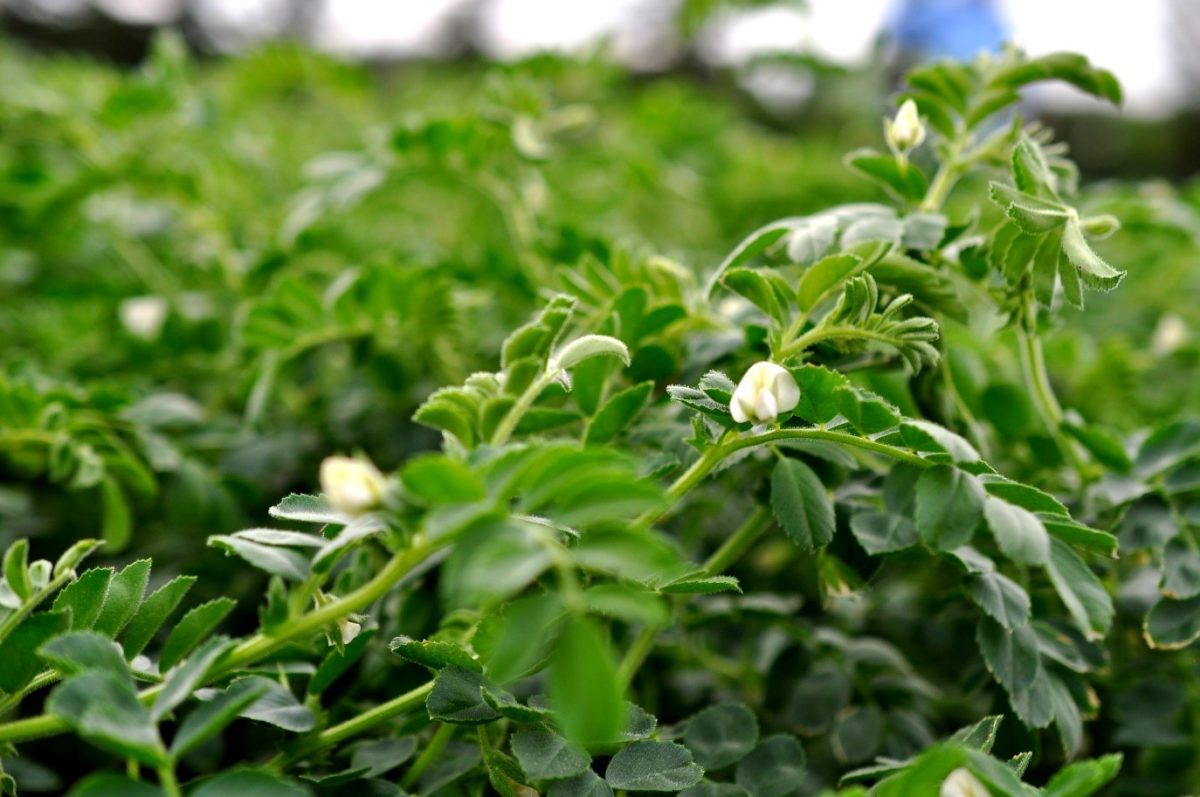
Figure 1: Field of Chickpeas, Kabuli type

What are Chickpeas?

Chickpeas are a pulse crop that is part of the legume family. The word “pulse” comes from the Latin word puls, meaning potage or thick soup. Pulses are the dry edible seeds of pod plants and are high in protein and fibre and low in fat.


The common cultivated chickpea is botanically classified as Cicer arietinum L. Within Cicer arietinum there are two major seed types that are grown in Alberta: Desi and Kabuli. Desi-type are small and produce coloured flowers, whereas Kabuli are large and produce white flowers. The majority of chickpeas grown in Alberta are the Kabuli type.

Find in-depth resources here to learn more about Chickpeas

Where Do Chickpeas Grow?

Chickpeas are a relatively small pulse crop in Alberta compared to field peas, and are most commonly grown across the southeastern part of the province.
Consider Growing Chickpeas If:

  • You live in southeast Alberta with 110 to 120 frost-free days.
  • You live in an area with high day and night-time temperatures.
  • Your soil is medium-textured and loamy.
  • Your fields have good drainage and low salinity.
  • Your soil has a neutral to slightly alkaline pH of 7.0 to 8.0.
  • You have high soil moisture and good pre-season soil moisture reserves.
  • You’re interested in marketing flexibility that includes markets for both human consumption (including fractionation) and animal feed.
  • You want to reduce your input costs (as pulses are nitrogen fixing); break disease cycles in your field; obtain a second-year yield boost in other crops following a pulse crop; improve your soil health; promote soil conservation and sustainable farming practices; and improve farm profitability.

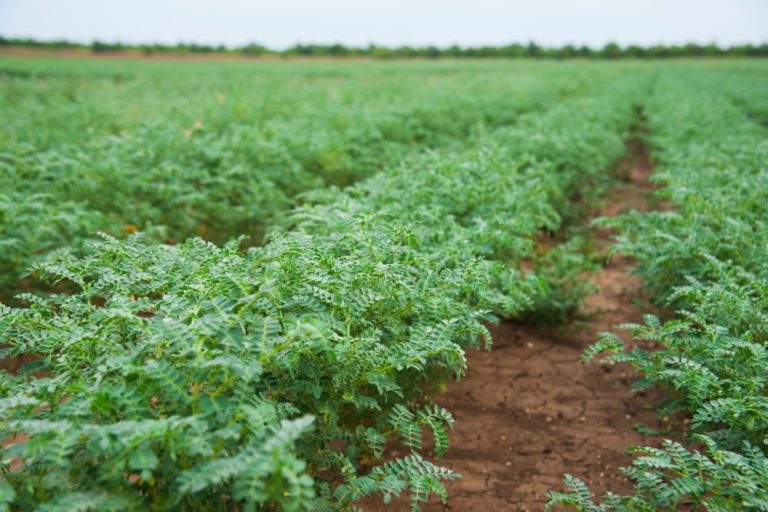
Figure 2: Field of Chickpeas, Photo Credit – Manitoba Cooperator
Description

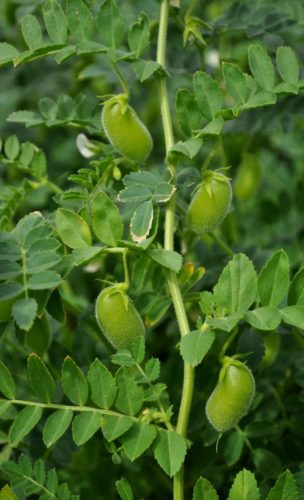
Figure 3: Close-up of Chickpea Plant with pod

Chickpea is a short annual herbaceous plant, 30 to 70 cm tall. Some taller genotypes may exceed up to one metre under favourable conditions.

The main stem gives rise to a variable number (up to seven) of primary branches near ground level.


Depending on the angle of branches to the vertical main stem, growth habit ranges from near prostrate to erect – the primary branches and main stem produce a potentially large number of alternate secondary branches, with higher order branching rarely produced.


Foliage is similar to vetches with small subdivided leaves from 4 to 7 cm long, with 10 to 15 leaflets. Vetches are a large, central and dominant root from which other roots sprout laterally.


Chickpea has an extensive root system – the taproot often penetrates well below one metre.


The fruit is an inflated pod containing between two and four ovules.

Kabuli And Desi Chickpea Seed

Chickpea seed (depending on type) weighs from 200 to 500 gm per 1,000 seeds – Kabuli (garbanzo) seeds are

much larger than Desi seeds. Although seeds always possess the distinctive chickpea “beak” (radicle tip), they vary considerably in shape and colour:

  • Kabuli types have larger, more rounded cream-coloured seeds (their creamy white colour is associated with the absence of anthocyanin pigmentation in the foliage).
  • Desi types have relatively small, angular seeds with rough, usually yellow to brown seed coat.

Figure 4: Desi Seed, Kabuli Seed

Adaptation Characteristics

Spring Frost & Drought Tolerance
  •  Chickpea does best with 15 to 25 cm of growing season rainfall.
  • Sensitive to late season frosts as little as 2 to 3 degrees – plant growth and seed quality will be adversely affected during the pod filling and ripening stage. It is relatively drought tolerant as its long taproot can access water from a greater depth than other pulse crops.
Type
  • Chickpea flowering is indeterminate, extending to 60 days or more – single, small purple or white flowers are produced in axillary racemes and are highly self pollinated.
  • Due to the indeterminate growth of chickpeas, plants can re-grow late in the season after rain showers or in the absence of a killer frost.
Varieties
  • There are several chickpea varieties to choose from.
  • Yield, characteristics, and standability data are found at Pulse RVT.
Maturity/Dates
  • Desi types require approximately 110 days to mature, while Kabuli types require up to 10 days longer (120 days) under optimum conditions.
  • Onset and duration of flowering is a function of temperature and photo period.
Soil
  • Chickpea is best adapted to medium textured, loamy soils.
  • Chickpea prefer a neutral to slightly alkaline pH of 7.0 to 8.0.
  • Chickpea grows best on well drained soils and does not tolerate wet or waterlogged soils or saline soils.
  • Chickpea is very susceptible to ascochyta blight, so rotational planning is critical for successful production.

Spring Frost & Drought Tolerance

  •  Chickpea does best with 15 to 25 cm of growing season rainfall.
  • Sensitive to late season frosts as little as 2 to 3 degrees – plant growth and seed quality will be adversely affected during the pod filling and ripening stage. o   It is relatively drought tolerant as its long taproot can access water from a greater depth than other pulse crops.

Type

  • Chickpea flowering is indeterminate, extending to 60 days or more – single, small purple or white flowers are produced in axillary racemes and are highly self pollinated.
  • Due to the indeterminate growth of chickpeas, plants can re-grow late in the season after rain showers or in the absence of a killer frost.

Varieties

  • There are several chickpea varieties to choose from.
  • Yield, characteristics, and standability data are found at Pulse RVT.

Maturity/Dates

  • Desi types require approximately 110 days to mature, while Kabuli types require up to 10 days longer (120 days) under optimum conditions.
  • Onset and duration of flowering is a function of temperature and photo period.

Soil

  • Chickpea is best adapted to medium textured, loamy soils.
  • Chickpea prefer a neutral to slightly alkaline pH of 7.0 to 8.0.
  • Chickpea grows best on well drained soils and does not tolerate wet or waterlogged soils or saline soils.
  • Chickpea is very susceptible to ascochyta blight, so rotational planning is critical for successful production.

Stages of Development

The life cycle of the chickpea plant has four principal stages:

  • germination and emergence
  • vegetative stage
  • reproductive stage
  • senescence (mature stage)

History

Figure 5 Chickpeas – Ready to Eat, Photo Credit – Pulse Canada

Chickpea originated in southeast Turkey about 8,000 years ago with evidence indicating Cicer reticulatum L. as the wild ancestor. The cultivated chickpea is Cicer arietinum L. with two seed types Desi (small), and Kabuli (large) seed type. The Kabuli chickpea is thought to have evolved from a Desi type, probably by mutation.


From its origin in Turkey and Greece, the chickpea was soon spread by traders to Europe, North Africa, and India. Kabuli types reached India in the 18th Century. In the 16th Century, the Spanish and Portuguese had taken Kabulis with them to South and Central America. Chickpeas are believed to have been grown in the hanging gardens of Babylon, one of the Seven Wonders of the Ancient World.  It took until the 1920s before chickpeas were commercially introduced in Canada, and the 1930s in California.


Although the wild species are difficult to maintain and have not been studied thoroughly, some of the wild species demonstrate attributes that may be useful for genetic improvement of Cicer arietinum (improved resistance to fusarium wilt, ascochyta blight, and botrytis grey mould). Although crosses between the wild and cultivated species are not generally successful, Cicer reticulatum can be readily crossed with Cicer arietinum to form hybrids that exhibit only slightly reduced pollen fertility and seed set.

Special thanks to Saskatchewan Pulse Growers.