Contact

APG Welcomes New Chair and Directors

Alberta Pulse Growers (APG) is pleased to announce that Don Shepert of St. Brides was selected as Chair of the organization. He will serve a one-year term leading the Executive, which also consists of Robert Semeniuk of Smoky Lake as Vice-Chair and Jerome Isaac of Crooked Creek as the Third Executive Member.

New Directors on the Board include Semeniuk for Zone 5 and Kelisha Archer of Drumheller for Zone 2, who were each elected for a three-year term. Will Muller of Bow Island was acclaimed as Director-at-Large (Bean), and Peter Konstapel of Spirit River was acclaimed as Director-at-Large (Non-Bean), each for a one-year term.

At its AGM this week, APG thanked outgoing Directors D’Arcy Hilgartner (Zone 5), Doug Sell (Zone 2), John Kowalchuk (Director-at-Large, Non-Bean), and Tim van der Hoek (Director-at-Large, Bean) for their many contributions to APG and Alberta’s pulse industry.

Pea Leaf Weevil Risk Map from 2018 Survey Season

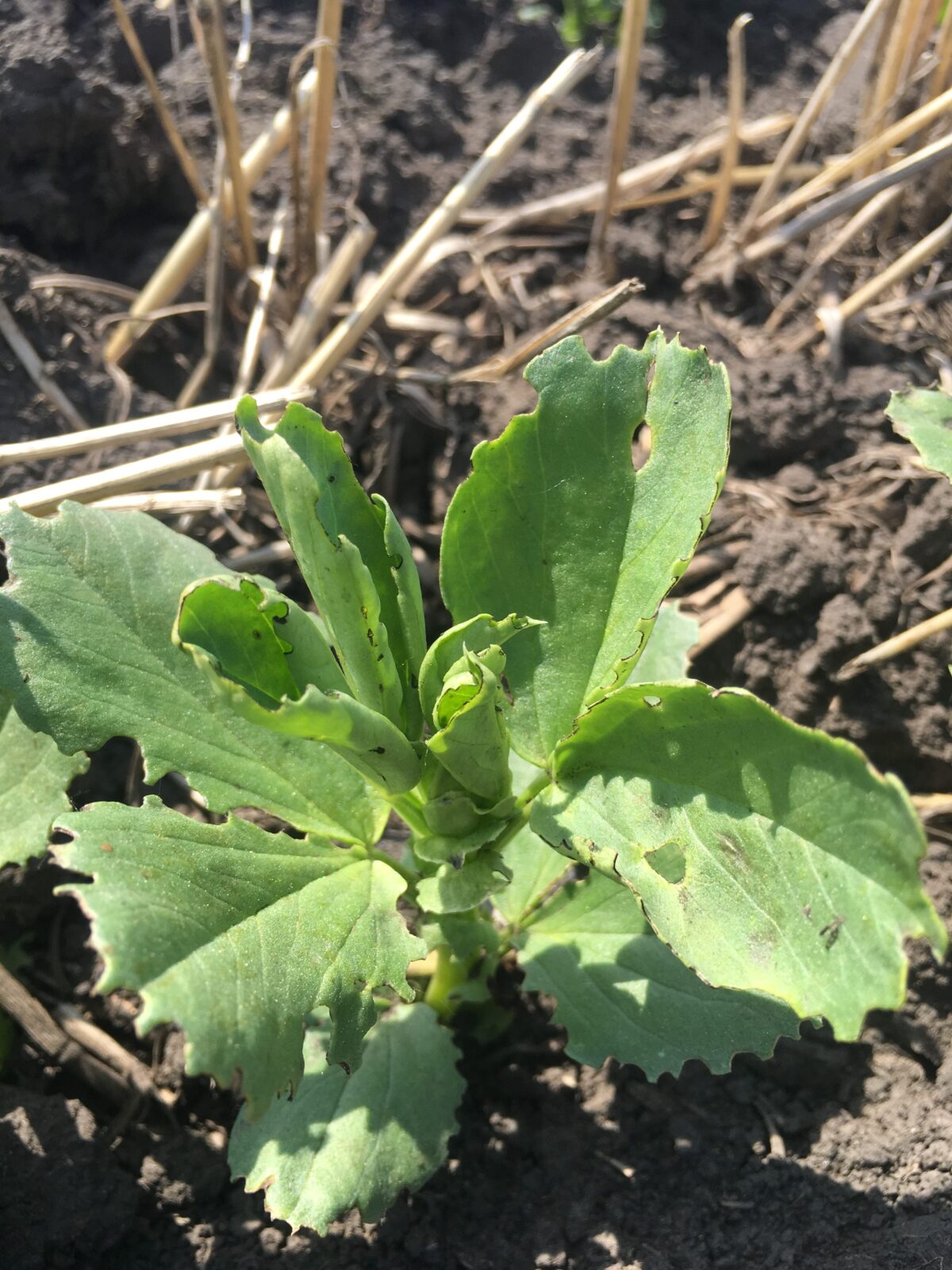
The annual pea leaf weevil (PLW) survey that is conducted by the Alberta Insect Pest Monitoring Network was released in early December. This important tool can provide insight into PLW pressure in your region of the province. The Alberta Insect Pest Monitoring Network is a collaboration between Alberta Agriculture & Forestry staff, independent agronomists and pulse growers across the province who cooperate in providing access for monitoring and survey of adult feeding. While the maps represent observed notching in the leaves of pea and faba bean plants by the adults, the damage is done by below ground feeding on nodules by the larvae. The publication of these maps is not a forecast for the 2019 growing season, but rather a summary of where adult feeding was located.

The only tool growers currently have to suppress the damage (as control is defined as >80% reduction) is through seed treatment with a registered neonicotinoid. Thiamethoxam (CruiserTM) and Imidacloprid (Stress ShieldTM) are the actives that can provide a window of protection so that pulse seedlings and their newly-formed nodules can symbiotically fix atmospheric nitrogen into a usable form for the plant.

Scott Meers, who leads the Alberta Insect Pest Monitoring Network, advises growers treat pea and faba bean seed when in regions with PLW pressure and along boundaries of where adult populations are present.

“Seed treatment is the only effective tool to limit the damage from this pest,” Meers said. “A foliar insecticide is not recommended as it is simply a revenge killing. The adult populations overwinter in alfalfa, roadside perennial legumes and pulse stubble. They move into new pea and faba bean crops in the spring. Goliath spraying does little to limit overall population or protect against yield loss.”

Research is underway to better understand the impact of PLW on the yield of peas and faba beans. There is also the ongoing hunt to find natural predators of this pest. Information on predators and parasitoids of many of the insect pests across Alberta and the prairies are available through the Field Heroes initiative. In preparation for the 2019 growing season, Alberta pulse growers should familiarize themselves with the PLW life cycle, and the current PLW pressure in their region. It is also recommended that growers inform themselves as to the natural predators and parasitoids that are present in their fields, keeping problem insect pest populations in check.

Full PLW map and other information PLW life cycle information available here: https://www1.agric.gov.ab.ca/$Department/deptdocs.nsf/all/prm16763

To view the full Twitter discussion on this topic in a recent Bug Chat, visit https://twitter.com/megarhyssa/status/1070386360513515526?s=12

Field Heroes initiative and information is available here: https://www.fieldheroes.ca/

Grower Advisory on Glyphosate Use

Glyphosate should only be applied on lentils and peas when the seed is at less than 30% moisture content in all areas of the field that will receive herbicide applications. In lentils this means the lowermost pods are brown and the seeds rattle, in peas the majority (75-80%) of pods are brown. 

The use of glyphosate is under more global public scrutiny than ever before, especially for lentils. It is important that growers continue to follow approved label rates and application timing to ensure Canadian product complies with Maximum Residue Limits (MRLs) set by importing countries. More than 85% of Canadian pulse production is exported around the world. The success of our industry depends on continued access to key export markets for lentils and all other pulse crops

Glyphosate is registered for pre-harvest weed control. It is not a desiccant, nor is it a tool to speed up crop maturity or dry down.

For more information on MRLs for lentils and other crops, visit keepingitclean.ca

Spray Pointers for Pulse Crops

by Tom Wolf, Agrimetrix Research & Training

www.sprayers101.com

Spray season is in full swing and it’s time to review the application needs of pulse crops.

Most pulse crops start off relatively slowly with comparatively low plant populations. As a result, good herbicide efficacy is needed to make up for the lack of crop competition.

Early weed removal protects yield potential, but it can mean spraying weeds that are fairly small and therefore difficult to hit. Pre-emergent products like Edge and Authority have a great fit for that reason. For post-emergent products, a coarse spray will mean lower droplet numbers, and that can mean misses. The best way to boost droplet density is to either increase water volumes or to decrease droplet sizes.  I always favour the increased water volume option because it gives two important advantages:

  • For some pulse herbicides, greater volumes improve crop safety.
  • For all pulse herbicides, greater volumes make it possible to take advantage of low-drift sprays. Low-drift spray, in turn, make it easier to apply the spray on time because of less sensitivity to windier conditions.

Try to apply herbicides using Coarse to Very Coarse sprays, in at least 8 to 10 US gpa, to get good coverage. The higher volumes will improve the performance of contact products such as the bentazon (Group 6) in Basagran, or as a component in Viper.

With the timely rains and warm temperatures that many areas received at the end of seeding, we’re expecting good conditions for disease development. This is where it gets challenging, because pulses quickly form very dense and complex canopies that are notoriously difficult for sprays to penetrate.  A few rules for fungicides (thanks to Dr Sabine Banniza of the U of S Crop Development Centre for helpful discussions on these points):

  • Understand the disease in your crop. Do you need to protect stems (anthracnose), leaves and stems (ascochyta complex, mycosphaerella), or senescing leaves or flowers (sclerotinia)? This is where the spray needs to go.
  • Understand the time of disease development.
    • Trash-borne diseases like anthracnose and ascochyta will start at the bottom of a lentil canopy, and early treatment before canopy closure will be important to arrest or at least delay disease development as long as possible.
    • Late season diseases like sclerotinia and botrytis push the application timing towards a closing or closed canopy. Success of such sprays is more elusive because of the rapid development of new biomass.
  • Regardless of the timing of the spray, take a bird’s eye view of the canopy.
    • If you can see the target you need to spray, the job is pretty straightforward and conventional water volumes and nozzles will work.
    • If the targets are hidden from view, it will take more water, slower travel speeds, and perhaps finer sprays to get the required coverage. Consider the higher end of the recommended water volumes (15 gpa in most cases), slower travel speeds (10 mph) and higher pressures (to generate the finer sprays).
  • Look at the size of the plant part you need to target. Large targets like leaves can capture almost any droplet size, but small targets like petioles or vertical targets such as stems may benefit from finer sprays, especially if they’re hidden in the canopy.
  • Focus on scouting and application timing. An excellent spray at the wrong time has less value than a mediocre spray at the right time. Again, low-drift nozzles can help with the timing. If it’s breezy, you can still spray safely and research has shown that the coarser sprays typically don’t hurt product performance.

Later in the year, you may consider desiccating your pulse crop. Whenever we have high biomass crops, higher water volumes are our most effective coverage tool. The top third of the canopy usually captures the majority of the spray, and the bottom third may get less than 10%.  By adding more water, the droplet density at the bottom of the canopy increases, boosting herbicide-induced drydown.

Take the Pulse Pledge with APG for International Year of Pulses & Your Health

Join the Alberta Pulse Growers (APG) by taking the Pulse Pledge today as Canadian International Year of Pulses (IYP) activities launch at a Pulse Feast in Toronto. Pulse Feasts are taking place today in different time zones around the world to celebrate the United Nations-declared year.

Allison Ammeter, Chair of APG and the IYP Canada Committee, will attend Canada’s Pulse Feast hosted by Chef Michael Smith of Food Network Canada. Launch guests will be encouraged to take the Pulse Pledge, a commitment to increase pulse consumption to improve their health and nutrition.

“Pulses are so great for health and the environment that encouraging more people around the world to take the Pulse Pledge is something we can all feel good about,” said Ammeter, who already enjoys eating and cooking with the pulses grown on her family’s farm. “If you are new to pulses, pledge to incorporate them into your diet once a week for 10 weeks to start. If you are already eating pulses, pledge to eat pulses three times a week. How about including half a cup of pulses into your diet every day? It quickly adds up to improved nutrition!”

As people eat more pulses, Alberta farmers will sell more pulses, Ammeter explained. This will contribute to APG’s mission and new five-year strategic plan to increase pulse consumption by 100 grams per capita per week. Another focused action for APG is to influence the development of pulse products to increase pulse consumption in domestic and key international markets, as well as to develop a vibrant value-added processing industry in Alberta.

This will, in turn, contribute to the realization of another target of the APG strategic plan, which is to increase the arable land planted to pulse crops in Alberta from eight per cent to 15 per cent over five years. This past growing season, Alberta farmers grew pulses on 1.8 million acres.

“IYP is an opportunity to capture the attention of consumers and the food industry, to demonstrate how incorporating more pulses into their diets and food products can improve nutrition and also support the environment,” Ammeter said. “It will leverage the international focus on pulses to build more demand for the pulses that Canadian growers are producing.”

The IYP Canada Committee consists of representatives from APG and its counterparts in other provinces, Pulse Canada, and industry representatives. Ultimately, the goal of IYP Canada is to contribute to the sustainable and profitable growth of the Canadian pulse industry. To learn more about the wide range of activities that support that goal and to learn how you can join the effort, visit www.iypcanada.ca.

Open Letter on Bill 6 to the Premier from Alberta Ag Sector

An Open letter to the Honourable R. Notley and Members of the Cabinet:

The undersigned organizations representing the majority of Alberta’s agriculture sector would like to call upon the Government of Alberta to consider farmers and ranchers concerns and suspend the implementation of the Enhanced Protection for Farm and Ranch Workers Act (Bill 6), and conduct proper and meaningful consultations with farmers and agriculture organizations.

Our collective organizations believe the government has lost the confidence of approximately 60,000 farmers and ranchers across Alberta and would urge the government to delay any further consideration of Bill 6 in order to earn that confidence back.

The amendments to the bill that your government has recently announced are not sufficient to deal with the deficiencies in the proposed legislation. More clarification and consultation around the specifics of Bill 6 are needed.

Agriculture is a significant contributor to Alberta’s economy and farmers and ranchers are an important part of the economic and social fabric of this province. The concerns being voiced by farmers, the confusion around the specifics of the legislation and the misinformation being communicated at the Town Hall meetings are issues too important for a flawed bill to be rushed through the legislature without proper consultation with farmers and ranchers.

The provincial commissions have been extremely proactive in trying to represent the interests of farmers on this issue. Most of the provincial crop and livestock commissions met with government officials on a few occasions in 2015 to discuss the government’s intentions to introduce farm safety legislation, and while we pressed for more information regarding the legislation, your officials said they were unable to disclose any of the details until an announcement was made. This is not consultation.

Moving forward, we will continue to press the Government of Alberta to suspend all action on Bill 6 and to work with us toward a solution that enhances farm safety while ensuring that farmers and the industry as a whole have an opportunity for meaningful input.

World Diabetes Day

World Diabetes Day Provides a Good Opportunity to Remind Diabetics about the Benefits of Eating Pulses

Pulses including dry peas, beans, lentils and chickpeas are a good food choice for a diabetic diet because they have a low glycemic index and are rich in fibre, said Alberta Pulse’s Food and Nutrition Coordinator.

“In research studies where pulses were eaten on their own, fasting blood glucose levels were significantly lowered,” said Registered Dietitian Debra McLennan, Alberta Pulse’s Food and Nutrition Coordinator. “Including pulses as part of a balanced meal helps to increase the dietary fibre content and lower the glycemic index of the overall meal, which can help promote better blood glucose control for people with diabetes. November is an ideal time to remind diabetics about the many benefits of eating pulses because it is Diabetes Month and November 14 is World Diabetes Day.”

Statistics from the Canadian Diabetes Association show that more than 20 million Canadians are living with diabetes or prediabetes and more than 20 Canadians are diagnosed with diabetes every hour. Created in 1991 by the International Diabetes Federation and World Health Organization, World Diabetes Day is a global campaign dedicated to advocacy and increasing awareness of the realities of living and dealing with diabetes.

Nutrition plays an important role in the management of diabetes. Balancing when, what and how much you eat are key to blood glucose regulation, McLennan explained. Pulses like dry peas, beans, lentils, chickpeas and faba beans are also nutrient dense, low fat and high in protein.

McLennan added that including pulses can be as simple as adding a handful of drained and rinsed canned black beans or chickpeas to a salad or soup to get that extra punch of nutrition. Another easy dish is the Alberta Pulse recipe for Greek Lentil Salad that’s loaded with flavour and packs 6 g of protein and 3 g of fibre per serving. Looking for a hearty soup for the winter months? Try the Vegetarian Chili Chowder! With 210 calories, 9 g protein and 8 g of fibre per serving, this recipe is easy to make and another tasty way to include pulses in your diet.

Both of the recipes mentioned above are gluten-free and vegetarian. The recipes are available for reprinting with credit. The Alberta Pulse website offers these and many other recipes that feature chickpeas, beans, lentils and field peas in appetizers, soups, salads, main courses and desserts. Watch for new recipes to be unveiled during International Year of Pulses 2016!

Farming Sustainability Video

Alberta Pulse, Alberta Barley, Alberta Canola Producers Commission and Alberta Wheat Commission are working together on a project that will assess producer readiness in relation to major consumer-driven sustainability programs. The video below gives more details about how producers ensure that their farms are sustainable.