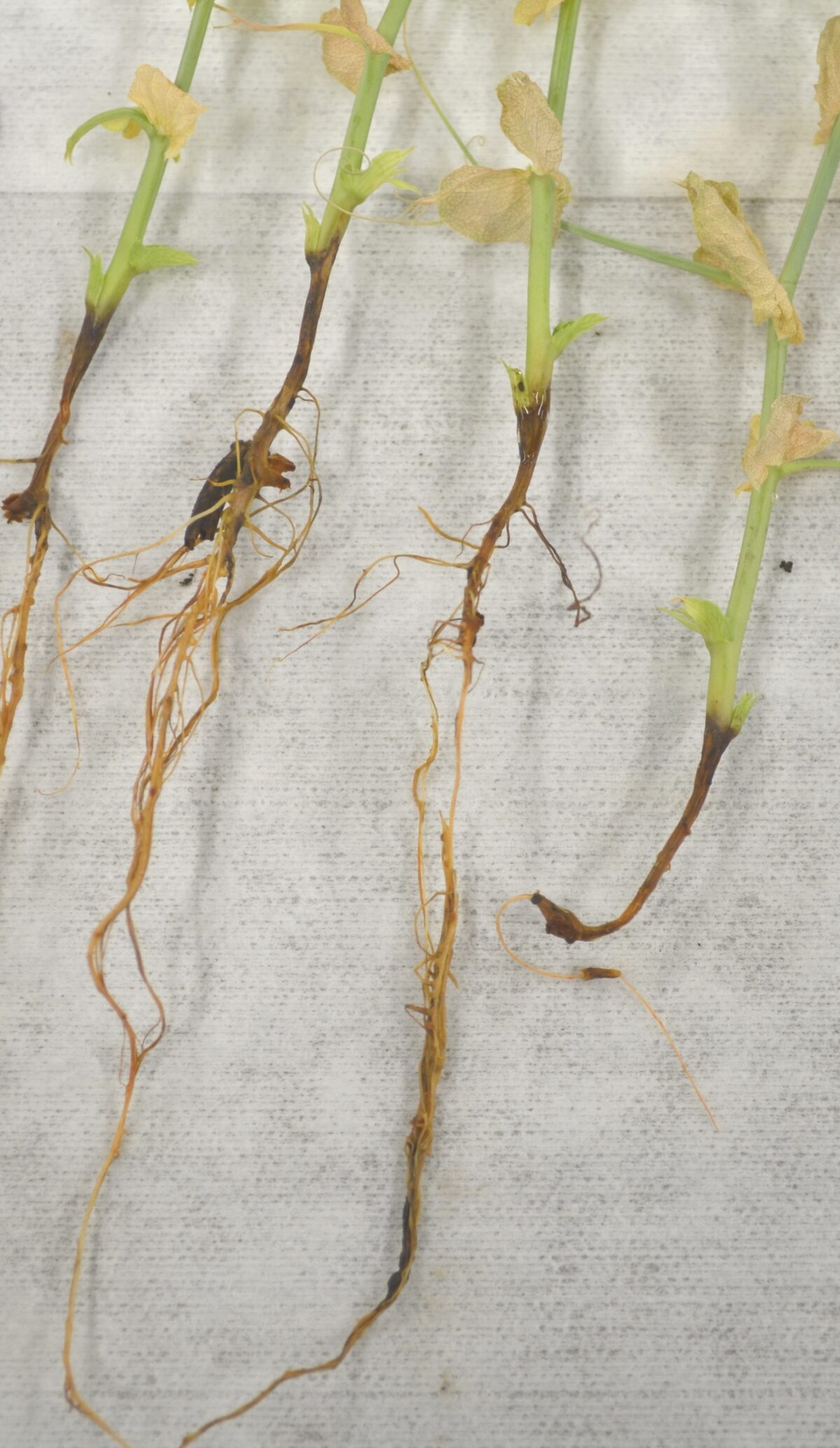
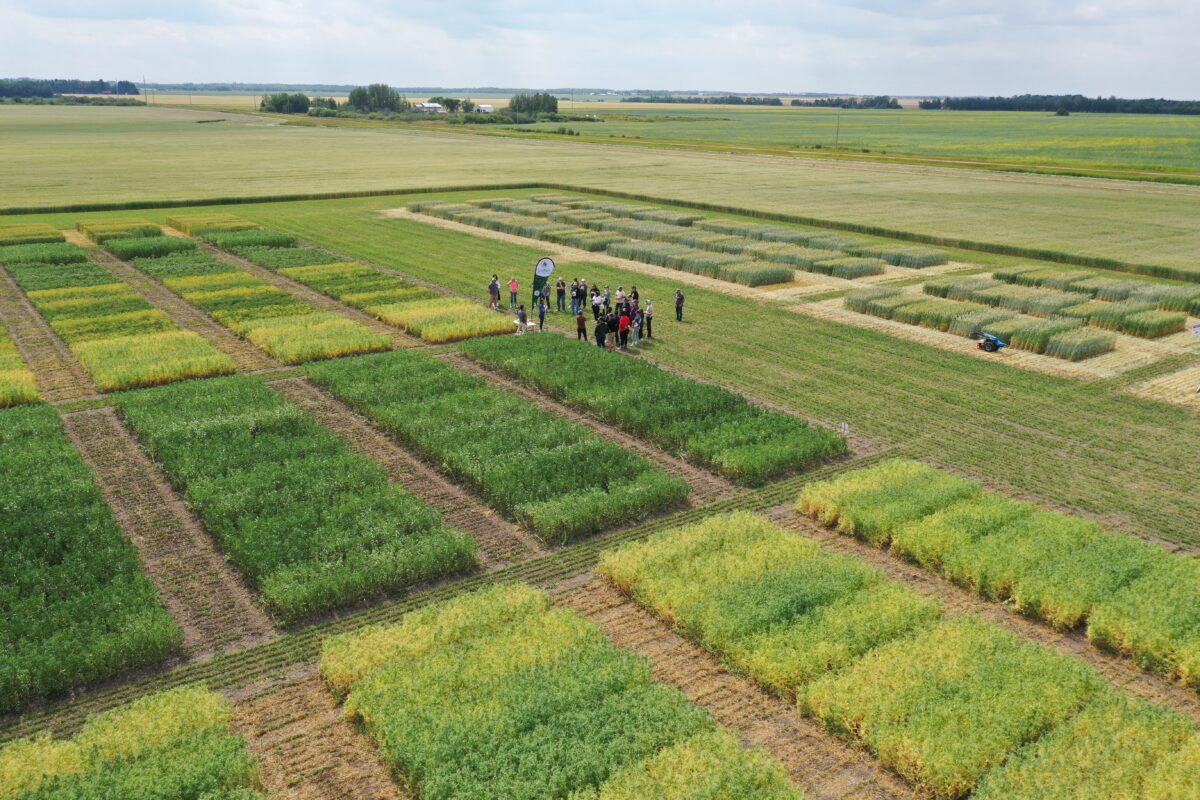
AAFC Plant Pathologist Dr. Syama Chatterton is warning Alberta farmers that the yellowing patches seen recently in their lentil and pea fields may be Aphanomyces. She stated: “With so much rainfall in June, now is when an early infestation of Aphanomyces can start in a pea or lentil crop. If you notice yellowing patches in your field, this could mean Aphanomyces is starting. It may not impact yield this year but could be the critical starting point of a field infestation that can have consequences the next time you grow pea or lentil in that field.” Read the full bulletin below. More information about Aphanomyces is available at rootrot.ca.
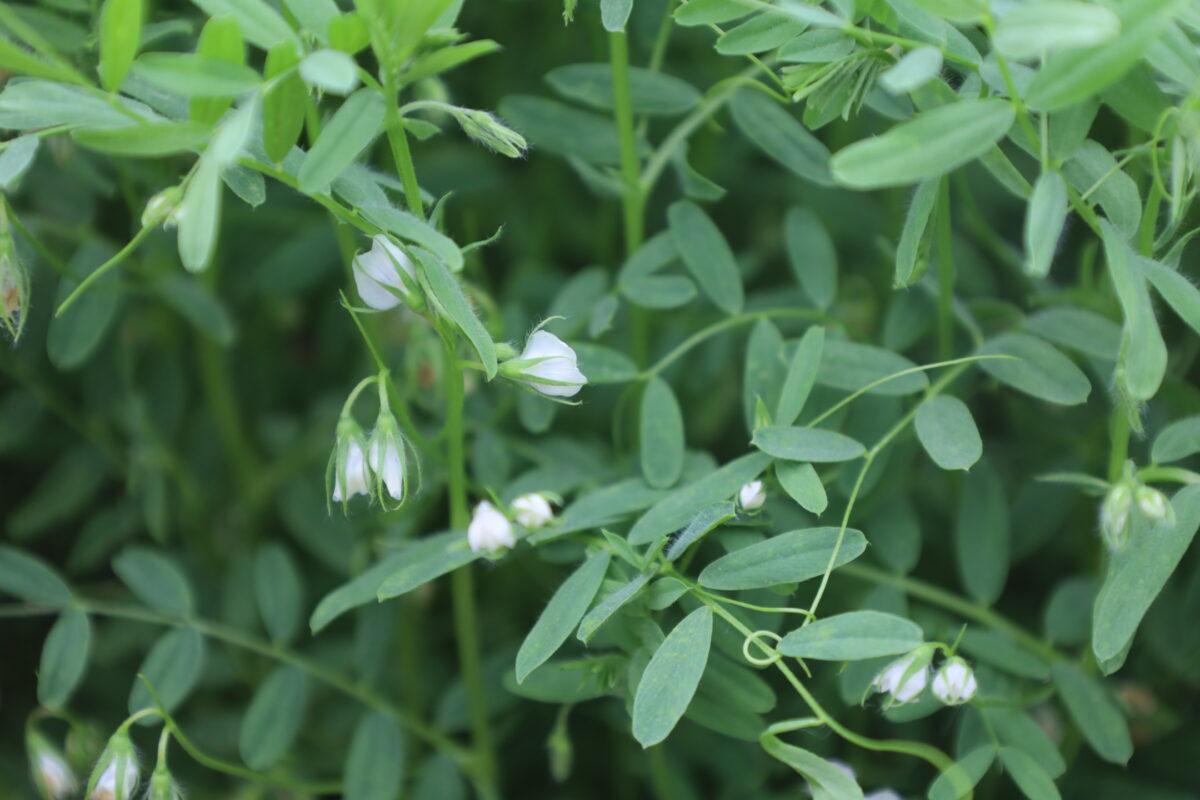
The Alberta Pulse Growers Commission (APG) is pleased to partner with the University of Saskatchewan’s Crop Development Centre (CDC) and Saskatchewan Pulse Growers to develop lentils that benefit a growing number of pulse farmers in Alberta.
“Thanks to research investment by Alberta Pulse Growers, lentils are now being planted and successfully grown in non-traditional lentil growing regions of Alberta, such as the Peace in the north,” said APG Chair Will Muller. “With the expansion and interest in our province, we are excited to once again be supporting innovation in lentil breeding and foster new and improved genetics for this crop.”
The program, which will be led by CDC plant breeder Dr. Ana Vargas, will develop lentils for improved yield, improved disease resistance (Anthracnose, Ascochyta blight, Aphanomyces and Fusarium root rots), as well as herbicide tolerance focused on Groups 5 and 14. Breeding will take place in Saskatoon and leverage testing sites in Alberta and Saskatchewan.
CDC’s strong history of pulse breeding and variety development began in 1978 when the Laird lentil was first released in Canada. Since then, hundreds of CDC pulse varieties have been released.
The agreement announced today at Ag in Motion reflects a commitment to commercialize new varieties with royalties on all acres, including those planted with farm-saved seed. Royalties flow back to breeders, which encourages further lentil breeding advancements. This creates a merit-based system where royalties flow to those breeders developing the varieties that farmers grow. APG and other funders, where applicable, will also receive a portion of royalties to reinvest in strategic program areas.
“Variety development has proven to have a high return on investment, and we are excited to fund the advancement of lentil genetics,” Muller explained. “It makes sense to pool resources, reduce administrative burden and avoid duplication by investing together through partnership. APG is looking forward to sharing ideas and goals with the team through the advisory committee, ensuring that the farm is the primary beneficiary of this work.”
The Alberta Pulse Growers Commission represents 5,400 growers of field pea, dry bean, lentil, chickpea, faba bean, lupin and soybean in Alberta. Our vision is to have pulses on every farm, on every plate.
For more information, please contact: Rachel Peterson, Communications Manager Phone: 780-986-9398 ext. 108 rpeterson@albertapulse.com
Alberta’s three largest crop commissions, Alberta Canola, Alberta Grains and Alberta Pulse Growers, have launched a new mobile app for Alberta’s Crop Protection Guide, better known as the Blue Book, giving farmers and agronomists convenient, on the go access to crop protection guidance.
Developed collaboratively by the three commissions, the Blue Book app is now available for download on Apple and Android devices. This launch follows feedback gathered in 2024, when producers and agronomists identified a growing need for a mobile-friendly version of the long-standing resource.
“This app is about putting practical, science-based information directly into the hands of farmers and agronomists when and where they need it,” said Alberta Grains Chair Scott Jespersen. “The Blue Book has been a trusted resource for decades and this next step ensures it continues to support informed decision-making on farms across Alberta.”
The Blue Book has supported Alberta farmers since 1977, offering guidance on pesticide application, product selection and farm safety. The new app builds on that foundation by improving accessibility while maintaining the reliability users expect.
“The Blue Book has evolved with the needs of farmers for nearly five decades, and this app is the next step in that evolution,” said Alberta Canola Chair Andre Harpe. “Moving to a digital format makes it even faster and easier for users to access important crop protection guidance in the field or on the go.”
At its core, the app features a comprehensive product database. It includes information on more than 700 registered crop protection products, including active ingredients, application details and direct links to product labels. Advanced search and filtering tools allow users to identify products based on pest, crop, product name or active ingredient.
Users can also compare products side by side to support decisions based on their cropping system and management goals. The app includes familiar Blue Book tools such as herbicide, fungicide, insecticide and seed treatment selector charts, along with guidance on product use and best management practices.
“Crop protection decisions are increasingly complex and timing is critical,” said Alberta Pulse Growers Chair Will Muller. “This app helps bring together the information farmers and agronomists need in one place so they can compare options and make confident, informed decisions for their operations.”
Designed for real-world farm conditions, the app includes offline functionality, ensuring access to critical information even in areas with limited connectivity.
The Blue Book is reviewed and updated annually with input from crop protection companies and industry experts, ensuring users have access to the most current information available. The app complements the print edition, which will continue to be produced and distributed.
The Blue Book app is available at both the Apple and Google Play App Stores for an annual subscription price of $20. More information can be found at albertabluebook.com.
APG’s Nodulation Scorecard calculator is now available on the app! Use this tool to estimate nodule health and nitrogen fixation potential for all pulse crops. This is the standard method used by pulse scientists and agronomists. Check out this valuable tool under Calculators on the APG app. Click here to download the app.
A new economic analysis finds a single week of rail and port disruptions during peak export season costs Canada’s grain sector up to $540 million, largely in unrecoverable export sales.
The analysis, commissioned by the Agriculture Transport Coalition, examined the economic impact of labour disruptions across rail and port operations during peak grain export periods and found that losses compound rapidly and fall disproportionately on farmers and exporters, with missed sales that cannot be recovered once shipments are delayed.
The coalition released the findings today as part of Too Much on the Line, a national campaign calling on the federal government to reform Canada’s labour relations framework and reduce the risk of future supply chain shutdowns.
The coalition is encouraging Canadians to visit KeepGrainMoving.ca and send a letter to their Member of Parliament, adding that participation in the federal consultation process is critical to ensuring government decisions reflect the economic realities of Canada’s grain supply chain.
“Every time grain stops moving, the consequences are immediate and unrecoverable,” said Bruce Burrows, executive director of Grain Growers of Canada. “Missed sales, broken contracts, and a reputation as a reliable supplier that takes years to rebuild. Canada cannot keep accepting this as the cost of doing business. There is simply too much on the line.”
The grain sector is uniquely exposed. Canada exports over 70 per cent of its grain production, with 94 per cent moving by rail. The analysis found that even the threat of disruption triggers losses, with up to $112 million in missed sales occurring before a work stoppage begins.
The findings come against the backdrop of the unprecedented dual railway stoppage in 2024, which brought grain shipments to a halt and cost the sector millions of dollars per day. Repeated disruptions have raised questions about Canada’s reliability as a global supplier at a time when agricultural exports are central to economic resilience.
With federal consultations on the labour relations framework now underway, the coalition is calling for two targeted recommendations: • Ensure good-faith bargaining by appointing a Special Mediator to oversee collective bargaining, manage timelines, and ensure progress • Resolve disputes before they escalate by providing the Minister with authority to consider economic harm and refer disputes to binding arbitration when necessary
“Canada’s customers expect reliability, and repeated disruptions put that at risk,” said Greg Northey, vice president of corporate affairs with Pulse Canada. “With so much on the line, this is a critical moment to ensure the right policy framework is in place.”
The coalition said it will continue to engage with government and stakeholders throughout the consultation process, with a focus on advancing solutions that protect Canada’s reputation, support farmers, and strengthen long-term competitiveness.
For media inquiries, please contact: Hana Sabah hana@graingrowers.ca | (514) 834-8841
Alberta crop and livestock producer organizations are welcoming the Government of Alberta’s success in securing an emergency use registration of strychnine to help manage Richardson Ground Squirrels.
This authorization provides an important and immediate tool for producers facing increasing infestations that threaten pasture, rangeland, and cropland across the province. Left unmanaged, ground squirrels can cause significant economic damage and undermine the productivity of farms and ranches that rural communities depend on.
With no viable, scalable alternatives currently available, this authorization is critical for producers dealing with widespread infestations. Strychnine remains the only proven tool that can be effectively deployed at the scale required in severe situations.
This outcome reflects sustained advocacy from Alberta’s agricultural sector and strong leadership from the provincial government. The efforts of Minister of Agriculture and Irrigation RJ Sigurdson, alongside the engagement of Premier Danielle Smith with federal counterparts, following earlier challenges in securing approval, were key to achieving this result.
We recognize the persistence required to secure this authorization and appreciate the Government of Alberta’s commitment to supporting producers and rural communities.
While this emergency registration provides needed short-term relief, producers note it is one tool within a broader approach to pest management.
Alberta’s producer organizations remain committed to working with all levels of government to ensure producers have access to effective, science-based tools to protect their operations now and into the future.
Alberta Beef Producers, Alberta-British Columbia Seed Growers, Alberta Canola, Alberta Grains, Alberta Pulse Growers, Alberta Sugar Beet Growers, Potato Growers of Alberta
Alberta Pulse Growers (APG) selected Dr. Parthiba Balasubramanian, who continues to develop dry bean cultivars with useful traits for farmers, as the winner of the 12th annual Alberta Pulse Industry Innovator Award.
“Each year, APG recognizes a person or organization whose progressive thinking and tireless efforts helped build Alberta’s pulse industry into the flourishing sector that it is today,” said APG Chair Will Muller. “Parthiba has been responsible for developing dry bean cultivars with traits appreciated by growers in Southern Alberta, including myself.”
Alberta pulse farmers and distinguished guests were on hand to celebrate Balasubramanian and his achievements at an award lunch during recent APG Joint Director-Advisor meetings in Calgary.
Farmers recognize Balasubramanian’s research contributions that have demonstrated success and advanced the growth of pulses in their businesses. The strength, consistency and performance of the dry bean cultivars developed by his program regularly provided, and continue to provide, excellent returns to the farm gate.
“Parthiba’s traditional scientific breeding techniques and strong attention to traits combine high yield with early maturity, lodging resistance, and enhanced resistance to white mould and bacterial diseases,” Muller explained. “This is in addition to improved seed quality such as size, shape, colour and colour retention traits for commercial production under irrigated conditions in Alberta and Saskatchewan which are held in high regard by pulse farmers.”
Balasubramanian was nominated for the award by APG’s Zone 1, which is comprised of pulse farmers in the Southern Alberta region with the climate to grow dry beans. Fellow scientists celebrated Balasubramanian’s accomplishments in a video that was shown during the ceremony and is available on the APG YouTube channel.
“I am truly humbled to receive this award,” said Balasubramanian, who is based at the Agriculture and Agri-Food Canada (AAFC) Lethbridge Research and Development Centre. “I accept this award on behalf of the team members who have been part of the dry bean breeding program in Lethbridge in the past and in the present. It is their hard work, dedication and work ethic that has made the accomplishments of the program possible. We have been very fortunate to receive funding from various organizations, and it is because of the funding that we have been able to do the things we do in the breeding program.”
The Alberta Pulse Growers Commission represents 5,400 growers of field pea, dry bean, lentil, chickpea, faba bean, lupin and soybean in Alberta. Our vision is to have pulses on every farm, on every plate.
For more information, please contact:
Rachel Peterson, Communications Manager
Phone: 780-986-9398 ext. 108 rpeterson@albertapulse.com
www.albertapulse.com
The Alberta Pulse Growers Commission (APG) has confirmed that 30.3% of eligible producers’ 2025 check-off payment is eligible for the Scientific Research & Experimental Development (SR&ED) tax credit for their investment in APG-funded research and development projects.
Producers are eligible to claim up to a maximum of 15% for non-incorporated farm operations and up to a maximum of 35% for incorporated operations of the determined 30.3%.
Producers who have paid check-off this past year and have not asked for refunds are eligible claimants for this year’s credits.
The federal SR&ED tax program is administered by the Canada Revenue Agency (CRA) and encourages businesses to invest in and perform research and development in Canada.
The Alberta Pulse Growers Commission represents 5,400 growers of field pea, dry bean, lentil, chickpea, faba bean, lupin and soybean in Alberta. Our vision is to have pulses on every farm, on every plate.
For more information, please contact: Rachel Peterson, Communications Manager Phone: 780-986-9398 ext. 108 rpeterson@albertapulse.com
The Honourable Heath MacDonald, P.C., M.P. Minister of Agriculture and Agri-Food
The Honourable Kody Blois, M.P., Parliamentary Secretary to the Prime Minister, House of Commons
February 3, 2026
Re: Closure of Federal Agricultural Research Centres, Including Lacombe, Alberta
We are writing to express our deep disappointment with Agriculture and Agri-Food Canada’s recent decision to close three federal research and development centres and four satellite research farms across Canada, including the research and development centre in Lacombe, Alberta. Research and development are critical to advancing industries and economies by addressing current challenges and building resilience for the future, and have played a vital role in growing agricultural exports to $100.3 billion in 2024 (AAFC, 2025). In the context of today’s global environment and declining productivity for Canadian agriculture, it is more important than ever to support domestic research capacity to ensure Canada remains a leader in agriculture for years to come.
Public investment in agricultural research has historically delivered some of the highest economic returns of any government expenditure. Independent studies consistently demonstrate that agricultural research and development generate strong multiplier effects by driving productivity growth, improving farm profitability, strengthening rural economies, and supporting downstream processing and export competitiveness. Richard Gray and Stavroula Malla (2007) indicate that the return on investment in agricultural research, for most agricultural sectors, ranges between 30-50%. The steady erosion of government investment in agricultural research over recent decades has already contributed to slower innovation adoption, reduced capacity for long-term applied research, and increased reliance on technologies developed outside Canada. Further reductions risk compounding these challenges at a time when producers are facing unprecedented pressures from climate variability, geopolitical trade disruptions, and rising input costs.
Canada’s agricultural sector operates in a highly competitive global environment. Jurisdictions such as the United States, the European Union, Australia, China and Brazil make robust investments in public-private research partnerships, genetics, climate resilience, and productivity-enhancing technologies. Maintaining and strengthening Canada’s competitive position requires sustained, regionally relevant research capacity.
Equally concerning is the apparent lack of meaningful consultation with stakeholders prior to these decisions. Producer organizations, industry partners, and academic institutions have invested significant financial resources, in-kind support, and expertise in collaborative research conducted at AAFC research and development centres. The lack of clarity surrounding staffing changes raises serious concerns for research funders, who must now assess the risks and consequences for recently initiated and ongoing research. The closure of facilities without prior engagement undermines trust and jeopardizes ongoing research investments and outcomes.
Given the scale and long-term implications of these decisions, there is a clear need for collaborative discussions on the future structure of agricultural research in Canada and the appropriate role of government moving forward. Early and meaningful engagement with industry stakeholders on options for the future use of Federal agriculture research assets is both warranted and welcomed. A transition is required for much of the on-going research as some projects are in the ground already and require time and resources to uncouple from AAFC land, staff and labs. The current timelines will not allow for these programs to proceed this field season, putting a halt to agricultural innovation indefinitely.
Producers and industry stakeholders are not asking the government to act alone. Rather, we seek a stable, predictable public research framework that enables effective partnerships, leverages private investment, and supports innovation that serves the public interest. A transparent and collaborative dialogue will help ensure that Canada’s agricultural research system remains globally competitive, regionally responsive, and capable of delivering long-term economic, agronomic and environmental benefits.
Thank you for your attention to this important matter. We would welcome the opportunity to participate in further discussions on how we can collectively strengthen Canada’s agricultural research and innovation system.
The organizations signed on to this letter include the Alberta Beef Producers, Alberta Beekeepers Commission, Alberta British Columbia Seed Growers, Alberta Canola, Alberta Grains, Alberta Lamb Producers, Alberta Pulse Growers, Alberta Oat Growers Commission, Alberta Pork, Potato Growers of Alberta and the Alberta Sugar Beet Growers. Together, we represent the majority of the over 40000 farmers and ranchers across the province of Alberta.
Sincerely,
C.C.
The Right Honourable Mark Carney, Prime Minister of Canada, P.C., M.P.
The Honourable Danielle Smith, Premier of Alberta, E.C.A., M.L.A.
The Honourable R.J. Sigurdson, Minister of Agriculture and Irrigation, E.C.A., M.L.A.
References
Agriculture and Agri-Food Canada (AAFC). (2025). Overview of Canada’s agriculture and agri-food sector. October 14, 2025. Accessed: February 2, 2026. https://agriculture.canada.ca/en/sector/overview