Contact

Staging Lentil Crops

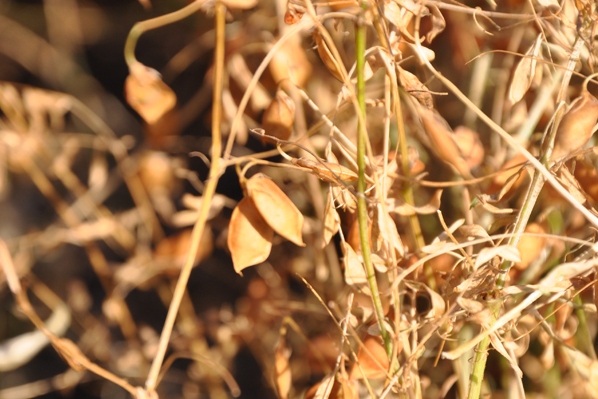
Accurately staging a pulse crop, in this case lentils, is incredibly important to ensure farmers aren’t losing yield, crop quality or ending up with product residues in the final sample.

Learn more from APG’s Nevin Rosaasen in this video.

Alberta Pulse Growers launches new app for Regional Variety Trials and news in real time

Alberta pulse producers can now download a smartphone app that allows them to search data from Regional Variety Trials (RVT) relevant to their zone and receive up-to-the-minute news from the Alberta Pulse Growers Commission (APG).

“The new Alberta Pulse Growers app will allow farmers to easily find out how pulse varieties fared in their own zones,” said APG Chair D’Arcy Hilgartner. “This means that trial results will be available to growers for different varieties and areas as they are reported. The new app will make a world of difference to growers like me who previously had to wait for all of the data to be reported and published at the same time.”

The app is available for free download on iTunes and Google Play. The RVT information can also be accessed via www.albertapulservt.com.

APG has funded regional variety trials across the province for many years to ensure that growers have current yield, standability and disease resistance information relevant to their own farms. APG is committed to ensuring the sharing of high quality data in an easy-to-use format for the producers who can benefit from it. The new web tool was designed to allow Alberta pulse producers to access the information they need when they need it because a pillar of best management practices for every crop is selecting a variety that is suited to a growing environment.

The app will also allow busy producers to receive news alerts for relevant APG updates such as news releases, Feed Pea and Faba Bean Feed Benchmarks, and Chuck Penner’s Pulse Market Insight column.

Growers attending Agri-Trade in Red Deer this week are invited to visit the APG booth to learn more about the new web tool and app.

The Alberta Pulse Growers Commission represents 6,000 growers of field pea, dry bean, lentil, chickpea, faba bean and soybean in Alberta. Our vision is to have Alberta pulses recognized by consumers as environmentally friendly, healthy, nutritious, and recognized by all producers as being an essential element in a sustainable cropping system.

For more information, please contact:
Rachel Peterson, Communications Coordinator
Phone: 780-986-9398 ext. 108
rpeterson@albertapulse.com
www.albertapulse.com

Improving pea standability using inter-row seeding and Plant Growth Regulators

Wheat stubble aids pea standability

Until better standability genetics arrive, pulse growers need other ways to keep their crops from lying down. Here are two ideas that could play a role.

Back in 2011, Alberta Pulse Growers surveyed the province’s farmers about what they saw as the most significant barriers to growing pulses. One of the most frequently cited production and agronomy barriers was lodging and its impact on harvest management. Growers want pulse crops that resist lodging and stay standing for easier harvests.

Sheri Strydhorst, Barrhead-based Agronomy Research Scientist with Alberta Agriculture and Forestry, believes that future pulse varieties will have gene-based standability traits. That’s still some way off. In the meantime, if Strydhorst comes across a good standability idea, she’s all ears.

“Steve Larocque at Beyond Agronomy had been working on one idea for a while,” Strydhorst said. “You seed your peas into standing wheat stubble, with the peas going in between the rows of wheat. At a point when the peas might be susceptible to lodging, the wheat stubble keeps them from lying down flat.”

Plant Growth Regulators (PGRs) are another possible way to prevent a crop from lying down, although no PGRs are currently registered on peas. A four-year study, led by Strydhorst and funded by Alberta Pulse Growers and others, has been working on both the wheat stubble idea and PGRs since 2014. In 2014, wheat was seeded to create the stubble treatments. Peas were seeded in 2015 – which was unfortunately a dry year with little lodging.

Two stubble heights considered

In 2016, the project looked at the standability of peas inter-row-seeded into 8-inch and 12-inch wheat stubble and a check area with no stubble, at two Central Alberta sites.

“What could happen is that the peas actually get taller because they are competing for light, and taller peas is not what we want,” said Strydhorst. “We saw that where we had inter-row seeded, the stubble held up the peas.”

This tactic, of course, also requires some planning and extra work on the part of the producer because in the season prior to planting peas, harvest requires leaving sufficient stubble.

The PGR component examined the performance of three different products. By applying a PGR in the first part of June, at the early reproductive stage of peas, the products will stop a plant hormone that makes the plant taller. So far, the PGRs are performing as expected without any reduction in yield or seed size, and that work will continue.

For her part, Strydhorst sees positive progress from inter-row seeding and PGRs. Both, however, can be considered temporary measures until a more lasting genetic standability solution comes into focus.

“Today it can take five days to harvest a quarter-section of peas,” Strydhorst said. “If we can get that down to 3 1/2 days, that’s better but it’s still not great. I think the tools in the toolbox are getting better but, at the end of the day, good standability genetics is what we need.”

Soybean genotype study

The road to 60-bushel soybeans

Manjula Bandara’s evaluation of promising soybean lines is helping southern Alberta producers consider this new crop with the best possible set of information.

How much room is there to increase soybean acreage in this province? Consider that in 2016, Manitoba grew 1.6 million acres of soybeans, with Saskatchewan contributing 240,000 acres. Last year, Alberta farmers grew 15,000 acres of soybeans.

On the face of it, then, Alberta seems to have plenty of runway for more soybeans. In practice, however, Manjula Bandara believes the crop could be a tough sell in the region south of Highway 1 where it’s best suited.

“We have so many cropping options in southern Alberta today,” said Bandara, Brooks-based Pulse and Special Crop Research Scientist with Alberta Agriculture and Forestry (AF). “Beyond the traditional crops, there’s now more corn, perennial forage crops like alfalfa, sugar beet, potatoes as well as dry beans. So when we have the option to introduce a new crop into southern Alberta’s irrigated areas, it has to be competitive.”

As AF Economist Ron Gietz pencils out the costs and returns of soybeans in southern Alberta, he finds the proposition interesting but not necessarily compelling, yet. Assuming soybeans sell for around their long-term price of $9 per bushel, a grower would need to produce a 60 bu./ac. crop to earn a place in a crop rotation.

Yields approach economic competitiveness

Over the past four years, Bandara has been working on a project that could tip the balance in soybeans’ favour. With funding support from the Alberta Funding Consortium including Alberta Pulse Growers, he’s been evaluating soybean varieties under southern Alberta growing conditions. This is part of a longer-term involvement with soybean that, for Bandara, began in 2004.

“Based on the varieties that are available, not a lot of people will be growing soybeans north of Highway 1,” he said. “Our goal is to evaluate soybean varieties south of Highway 1, in order to minimize the risk for growers.”

Soybean breeders send their lines to Bandara, who evaluates them based on agronomic criteria such as seeding date, density and spacing, as well as the use of nitrogen. At any one time, he’d like to see 16 to 18 promising lines in his program.

Overall, Bandara sees soybean yields approaching a threshold where southern Alberta farmers will start to get interested. Yields in recent years’ evaluations have ranged from 35 bu./ac. to 60 bu./ac., with the occasional spike north of 70 bu./ac.

Bandara suggests that, for areas with 2,300 to 2,400 heat units available, and 115 to 121 days of growing season, soybeans can be competitive with other high-value southern Alberta crops. One wild card is the incidence of disease under irrigation.

After 12 years evaluating soybeans in southern Alberta, Manjula Bandara isn’t predicting explosive acreage growth to the levels seen on the eastern Prairies. Still, if the right factors align, there’s a good chance Alberta will see more soybeans in the coming years.

“That is our hope,” Bandara said, “but it all depends on the price and how crushing capacity unfolds. As long as the price is reasonable, a moderate increase can be expected.”

Alberta Weed Survey

Alberta and Prairie-wide survey assesses weed populations

Summer 2017 marks the first general weed survey of Alberta since 2010, providing scientists, agronomists and farmers with a current picture of what’s out there.

If you made a list of the most prevalent and potentially yield-damaging weeds on your farm last year, what would they be?

For many growers, the lineup of weeds to be controlled has changed over the past 10 years. Weed management practices and available crop protection products have evolved accordingly.

The purpose of the 2017 Alberta Weed Survey is to obtain solid data on the abundance and distribution of weed species in the province’s pulse, cereal and oilseed crops. Julia Leeson, Weed Monitoring Biologist with Agriculture and Agri-Food Canada, is running the project, which spans the three Prairie provinces. Alberta Pulse Growers is one of the organizations that has contributed funding for the survey’s Alberta component.

“It’s been seven years since the last Alberta general weed survey,” Leeson said, “and 10 years since the last survey of herbicide-resistant weeds in Alberta. The survey allows us to see what’s changing and what’s increasing, which allows us to be better able to manage weeds.”

Coming to a farm near you

Leeson is leading a team of more than 40 people working on the survey in the summer of 2017. Their job is to survey fields and compile weed profiles from 1,200 farms across the Prairies.

The team randomly selects quarter-sections in the three provinces and contacts landowners for permission to visit. Weed surveyors will be walking fields after the producers have completed their normal in-crop weed control.

“We just walk through the land, wearing booties so it really is minimal impact,” Leeson said. “Most people are very positive about letting us on the land. We want to look at what’s been missed by the in-crop application, and what will be going to seed that could become a problem next year. We will also collect seed to be tested to determine the extent of herbicide resistance in various weed species.”

The 2017 Alberta Weed Survey is a massive undertaking. Compiling and interpreting the data will take roughly two years. Leeson expects to publish her findings in early 2019. Which newer weeds are on the march? Which long-time foes are declining? How is the incidence of herbicide-resistant weeds shifting?

The survey data will tell the tale, but Leeson’s in no doubt: when it comes to weed management in crop production, the times are changing.

“The weed spectrum has changed significantly over the past 20 years,” Leeson said. “For many years, the Top 20 weeds were fairly consistent. Changes in tillage practices and herbicide use patterns and crop rotations have shaken things up. That’s why it’s so important that we do this survey.”