| DAMAGE |
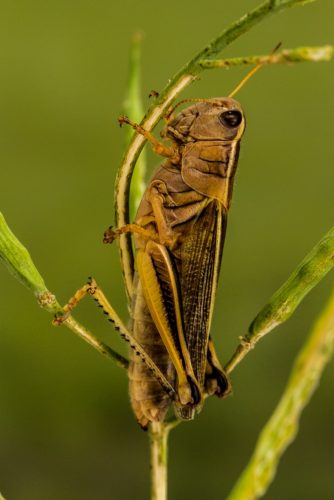
- Grasshoppers feed on the foliage of almost any crop, dry beans included.
- Field edges usually have higher infestations as they move in from field borders. Significant defoliation and yield damage can occur, especially if the other crops surrounding have matured and the dry beans are still immature, which increases migration of grasshopper populations to the field.
- Seedlings on the edge of the field can be attacked by grasshopper nymphs as they emerge in the spring.
- Grasshoppers pose the greatest threat from the bud stage through to early pod development as they eat flower buds, open flowers, and developing pods. In this case, yields can be reduced by as much as 90% and cause delays in maturity as the plant tries to compensate for the lost biomass.
- At harvest, seed contamination with grasshopper parts, specifically heads, can be a problem to clean out as grasshopper heads are similar in size, resulting in grade reduction.
- Damage from grasshopper feeding is variable. Slight damage to the pods may result in shattering, seed loss, increased risk of disease, and seed staining.
|
| LIFE CYCLE |
- Overwinter as eggs in pods (8-150 eggs/pod) laid in soil and hatch the following spring when the temperature reaches 4.5°C.
- One generation per year.
|
| CONTROL |
- To monitor, start from a corner of the field, sample at least twenty sites along a line to the field centre, then to one side. Count the number of nymphs that jump in a 1 ft2 area as you approach each site (e.g. every 100 steps). Divide the total number of grasshoppers counted by 2 for number/m2.
- Check field margins for grasshoppers moving in from roadsides and headland. Numbers will be higher in field margins and a thick crop will deter the insects from moving further into the field as they prefer more open and bare areas. Also check around wet areas in drought seasons.
- If grasshopper populations only exceed the economic threshold in the field margins, an edge treatment with an appropriate insecticide can save time and reduce costs, while providing adequate control.
- Target younger instars in order to use the lowest recommended rates and to reduce the area requiring treatment. The nympths molt through five nymphal instars before becoming adult in three to seven weeks.
- If control is needed, the optimal timing is when nymphs are at the third instar, which is usually about mid-June. At this stage the grasshoppers become mobile, consume more, and most of the hatch should be complete.
- Once grasshoppers reach adult stage, insecticides are much less effective in protecting crops.
- Several products are available as sprays and baits. Treat only if damage and numbers warrant.
- Natural predators include birds, small rodents, coyotes, parasitic and predatory insects, as well as the pathogenic fungus Entomophthora grylli Fresenius, and the microsporidian parasite Nosema locustae Canning.
|
| ECONOMIC THRESHOLD |
|
| REFERENCE |
|