New Pea Leaf Weevil Maps for Alberta


Updated resources showing the expansion of Pea Leaf Weevil in Alberta up to 2019 are now available.
Click here for the 2019 Pea Leaf Weevil Map.
Click here to see the 2011-2019 Expansion of Pea Leaf Weevil.

Updated resources showing the expansion of Pea Leaf Weevil in Alberta up to 2019 are now available.
Click here for the 2019 Pea Leaf Weevil Map.
Click here to see the 2011-2019 Expansion of Pea Leaf Weevil.
.Click here to view the recorded webinar
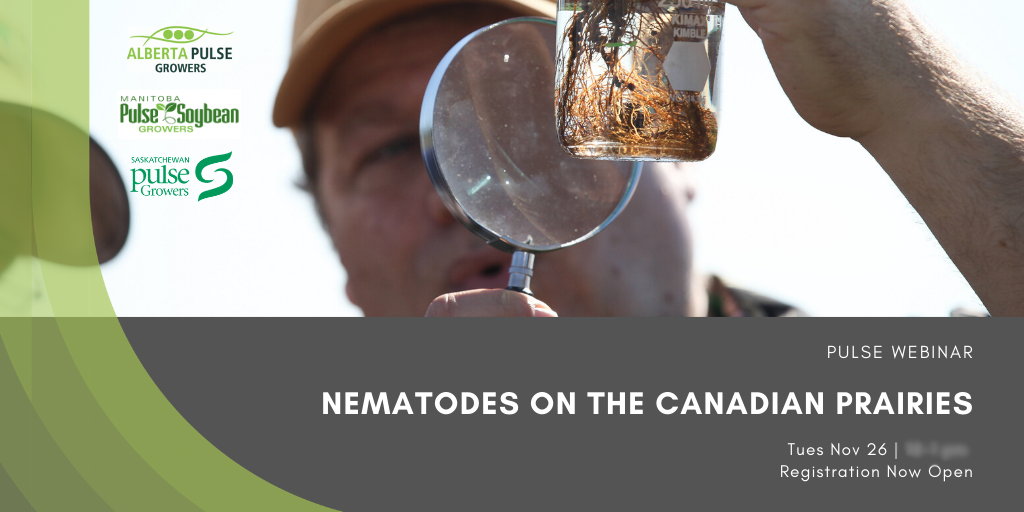
Dr. Mario Tenuta, Professor of Applied Soil Ecology at the University of Manitoba, has conducted extensive research into plant and soil nematodes across the Prairies.This webinar looks at nematodes, how they affect pulse crops grown on the Prairies, and how this pest could create potential market access barriers for Canadian pulse crops.
The 2019 growing season and harvest will be one for the record books and not necessarily in a good way. A cooler than normal growing season coupled with below average moisture in early spring was experienced across most of Alberta. Some areas in the south were in their third or fourth season of drought conditions while areas of the southern Peace experienced one of the wettest seasons on record. Late season rains and a very cold fall delayed harvest and, for many farmers, the struggle continues.
As for pulse crops, yields are all over the map while prices remained below the five-year average due to ongoing market access issues with India. Pea yields again were variable, and lentils were around average, while faba beans are still in the field. Dry bean harvest was delayed significantly with a heavy early snowfall in September across the growing region. Chickpea growers saw some frost pockets in late May in southern Alberta and some acres were reseeded. The hashtag #Harvest19 on social media has been a depressing one to follow, not only here in Alberta, but across the Canadian Prairies and for our neighbours to the south.
The Alberta Pulse Growers continue to receive questions about safe storage of pulses. There are still some pockets of acres of peas and faba beans in the field that have yet to be harvested. With many aeration bins already filled or allocated to other crops, there have been questions about drying peas and fabas using conventional dryers. Additional information on storage and drying of pulses is available for growers below.
Stress levels remain high with crop still in the field or waiting to be conditioned to safe moisture levels for storage. APG employees can relate. “My family farm is in the same boat,” said Nevin Rosaasen, APG’s Policy and Program Specialist. “Many parts of Saskatchewan including our crop district are way behind schedule and now with snow, there will be crop left out, no doubt. Our area is used to running a large percentage of the crop through the dryer and as long as the propane delivery can keep up to demand, we should be done drying in the new year sometime.” Many families are experiencing burnout and stress and it is important to understand you are not alone.
APG’s Research Manager Dr. Jenn Walker and her family are keenly feeling the discouragement and frustration of this year as one third of their crop is yet to be harvested. “There’s a point where it feels like doesn’t matter how hard you work you will not reach that finish line. It impacts us all, even the kids feel the stress,” she commented. “Absolutely every moment of your day is focused on can we or can we not combine, and how long can we safely keep it before we have to deal with it again.” We can all acknowledge that farming is not an easy profession, and it is always dependent on the weather, however, the reality of that vulnerability, especially in years such as this, weighs heavy.
APG staff are here to help. We are having the same debates and asking the same questions. If you have questions regarding aeration, safe drying temperatures, lifters on flat peas or anything related to this difficult harvest, do not hesitate to reach out to us. Even if you need to talk about the difficulties you are having, or have questions about research or agronomy, we would love to hear from you. When you are feeling stressed or burned out, pick up the phone, call a neighbour, a friend or seek professional help because we are all in this together.
Jenn Walker can be reached at 780-986-9398 extension 104 or on Twitter @APGResearch
Nevin Rosaasen can be reached at extension 780-986-9398 105 or on Twitter @APGExtension
Improved management of Pulse Crops – Technical details for aeration
https://albertapulse.com/2019/09/improved-management-of-stored-pulses-updated-guidelines/
Safe Storage of Pulse Crops
https://albertapulse.com/2016/09/recommendations-proper-aeration-drying-pulse-crops-pcn-fall-2016/
Drying of Pulse Crops
https://saskpulse.com/files/general/150824_Post_harvest_storage2.pdf
Additional Resources for Mental Health and Managing Stress
https://www.albertahealthservices.ca/injprev/Page4875.aspx
Clients having thoughts of suicide should call Health Link at 811 or the Mental Health Help Line at 1-877-303-2642, available 24 hours a day, 7 days a week.
The DoMoreAg foundation also has great resources available to take care of your mental health
https://www.domore.ag/blog/10-ways-to-take-care-of-your-mental-health
Watch this video sharing information on the latest update on Canadian pulse market access to India. The video is provided by Pulse Canada. Alberta Pulse Growers is a proud member of Pulse Canada. Click here to view the video update.
Register now for a free webinar on Nov. 26 called Nematodes on the Canadian Prairies that Farmers & Industry Should Know to Protect Yields. This webinar, hosted by Alberta Pulse Growers, Manitoba Pulse & Soybean Growers and Saskatchewan Pulse Growers, will cover research that Dr. Mario Tenuta has undertaken to understand plant and soil nematodes.
Throughout the webinar, Dr. Tenuta will update attendees on his current research on nematodes, how they affect pulse crops grown on the Prairies, and how this pest could create potential market access barriers for Canadian pulse crops. Continuing education credits for CCA and CCSC members are available. To register for this webinar, click here.
Evaluation of Emission Reductions and Cost Savings in Sectional Control Air Seeders, Drills and Sowing Equipment across the Canadian Prairies.
Alberta Pulse Growers is issuing this Request for Proposal (RFP) to acquire the services required to complete the evaluation of emission reduction and cost savings in sectional control air seeders, drills and sowing equipment in the Canadian prairies.
Alberta Pulse Growers is pleased to have worked with PAMI to build updated guidelines for aeration and storage of peas and lentils. Click here to read the updated guidelines. For the full research report, refer to the research section of APG website here.
Learn more about desiccation and pre-harvest timing for faba beans from APG Policy and Programs Specialist Nevin Rosaasen in this video.
Learn more about desiccation and pre-harvest timing for peas from APG Research Manager Dr. Jenn Walker in this video.
The annual migration of the sun across the horizon coincides with harvest and the arrival of new crop. Pulse growers are often the first out harvesting, either peas, lentils or chickpeas. Faba beans and soybeans tend to be ready later in the harvest season. Given market disruptions are still in place in key markets including India, growers are looking for information on harvest tips to maintain premium quality pulses and insight into storage in case of pulse carry-over from last crop year in anticipation of a return to near normal prices for peas and lentils.
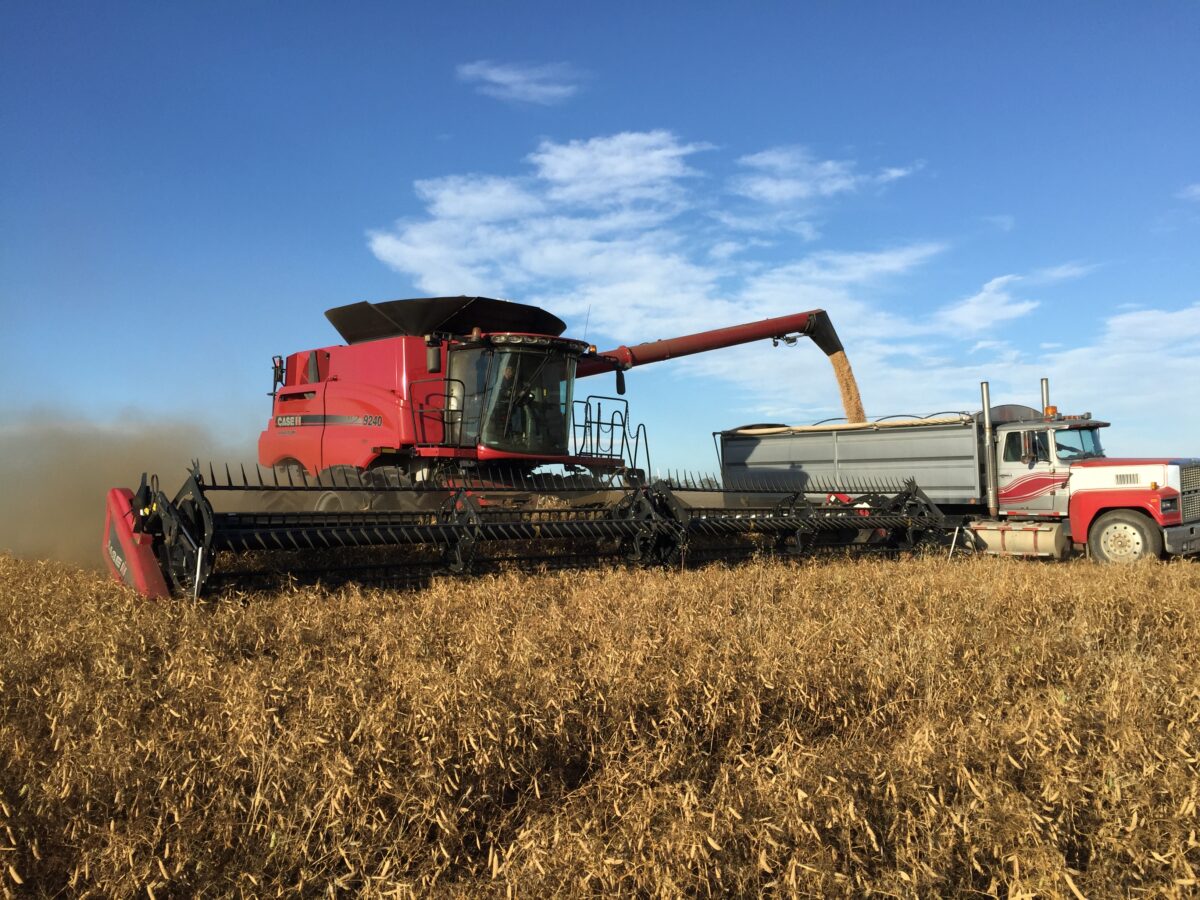
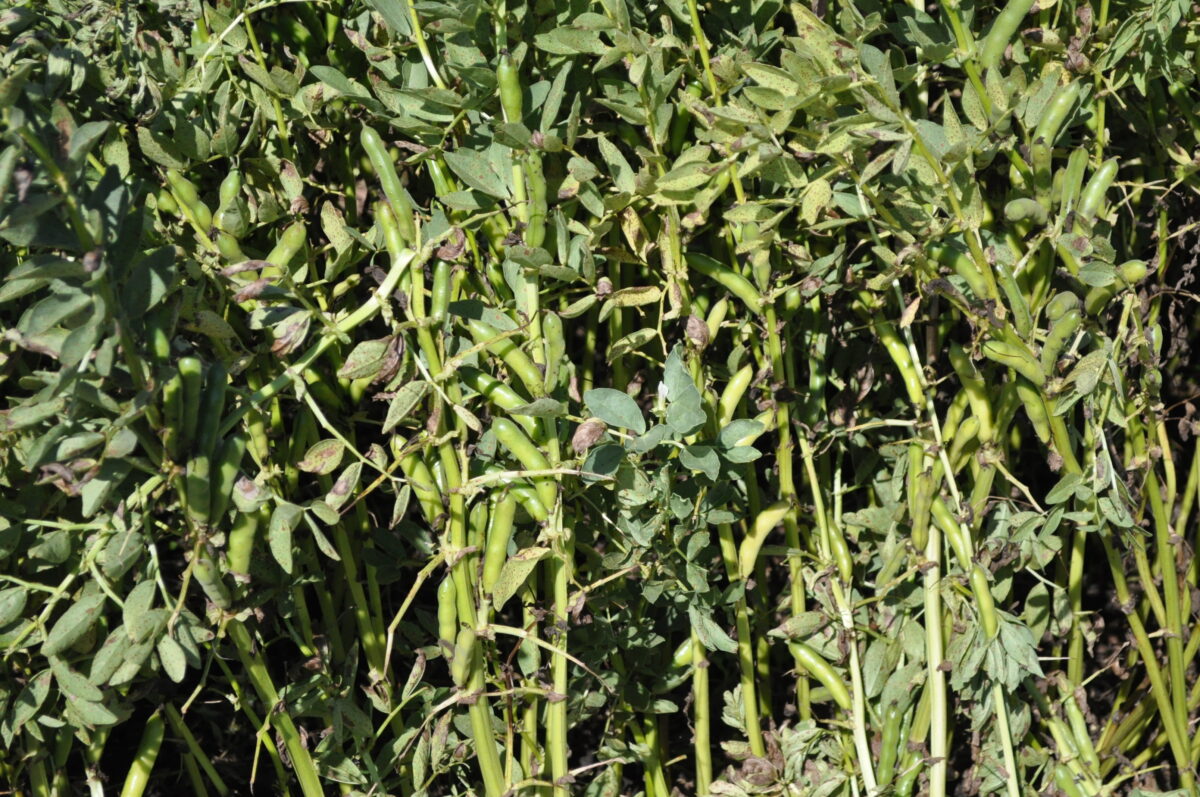
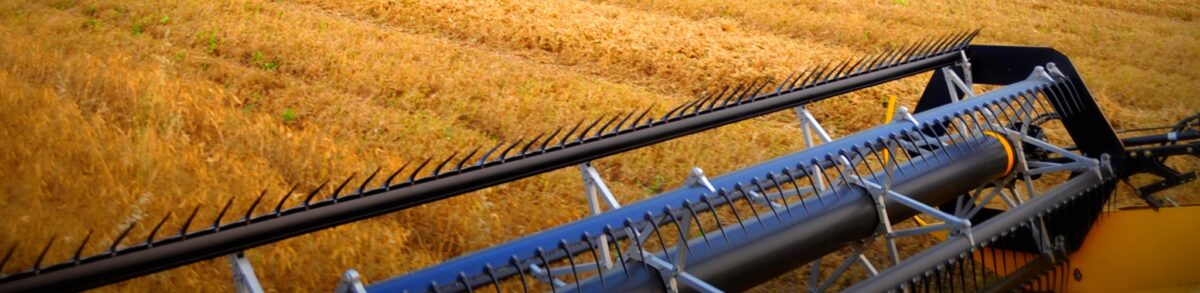
Harvesting pulses can be a challenge. Wind, rain and heavy stands can result in lodging or, in some cases, the crop completely lays over (peas). Providing the field was rolled after seeding, in most cases, experienced operators with the right headers can harvest almost all the lodged crop. Lifters, rock damns and other aftermarket accessories can provide growers a smoother harvest experience. Flex headers with tilt options as well as draper headers and pea augers are features that seasoned pulse growers are often seeking to help with harvest. Lentils, although a shorter crop, still stand erect and are not usually as challenging as a lodged pea crop. In the case of all pulses, care should be used when threshing to minimize cracks, splits and damage to seeds. Chickpeas have small beaks connected to the seed coat and require special attention to avoid separating from the seed. Harvesting of pulses can begin when the seed moisture is still above commercially dry. In the case of peas, dry at 16% moisture, experienced growers begin combining between 19-20% moisture to minimize cracks and splits. Peas, lentils, chickpeas and fabas can all be dried in aeration down to their commercially dry specifications quite rapidly and without concern.
Producers do have to pay attention to temperature while binning pulse crops. Although moisture content may be near targets, the temperatures of harvested pulse crops themselves can be quite warm. Care should be taken, especially with lentils and peas harvested at ambient air temperatures over 20 degrees Celsius. Temperature and moisture are the contributing factors to growth of moods and fungi that can result in spoiling, heating, and subsequent crop quality downgrades. Conditioning, by coring the entire centre of the bin through removing two or three loads (depending on size of bin and size of trucks) can be a good strategy to ensure moisture migration following harvest does not result in spoiling at the top of the bin (winter) or the bottom of the bin (spring).
Handling of pulse crops should be done with attention, and, where possible, conveyors should be used. When using augers, ensure the motor is not running at full throttle (low to mid) and ensure the auger is full of product. This minimizes cracks and splits in the augering process. Care should be taken to avoid augering and dropping crop from high heights where possible and to minimize additional handling if at all possible.
Many farmers are exploring the option of carrying over peas and lentils to subsequent crop years. Peas are a good option for storing longer term. Peas have lower tannins than green lentils or fabas. Over time, tannins in the seed coat cause oxidation and discolouration can occur. High tannin faba beans, Desi chickpeas, maple peas and high tannin lentils run a greater risk of oxidation if storing additional crop years, something to be aware of if considering longer term storage. Once in storage, it is important to monitor bins as sweating can occur months down the road and can lead to spoiling within areas of the bin. Pulling a few loads from the core of the bin is the prudent way to ensure your pulses are conditioned and will continue to make the grade when delivered into the future.
If you have any questions about storing pulses, reach out to Dr. Jenn Walker (jwalker@albertapulse.com or @APGResearch on Twitter) and/or Nevin Rosaasen (nrosaasen@albertapulse.com or @APGExtension on Twitter).