
Dry Bean
Diseases
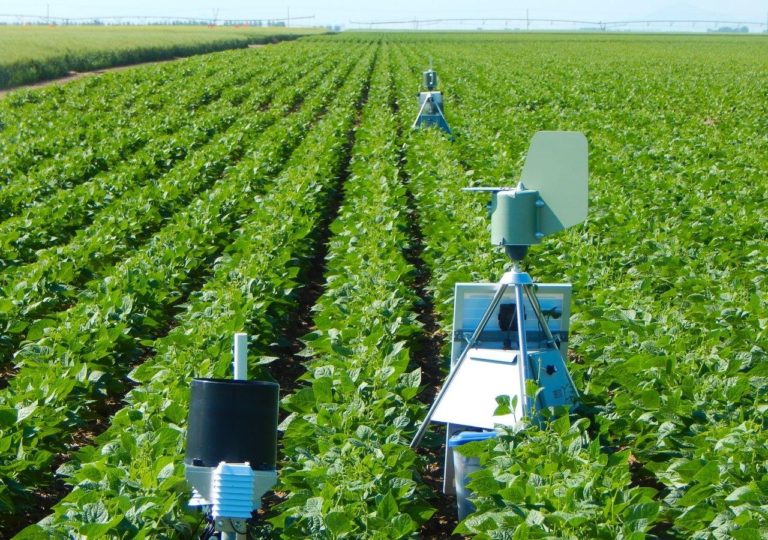
Dr Syama Chatterton Research on Dry Bean Spore Trapping to Predict Disease Risk
Dry beans are very susceptible to a number of diseases and few chemical control measures are available – it’s important to use an integrated management program in dry bean production. Disease prevention recommendations include:
Scouting is one of the most powerful practices to effectively manage crops. It allows early detection of disease symptoms, provides opportunity for mitigation of spread and minimizes the impact on yield.
Keeping crops healthy and disease free is a priority for producers and one practice that can help achieve these goals is applying fungicide. Producers need to consider both disease risk and economics when deciding whether to apply a fungicide.
Disease risk is influenced by the field history (crop rotation, levels of disease in previous susceptible crops; the environmental conditions such as temperature and precipitation levels that may favour disease development; and the level of variety resistance to the disease. A fungicide should only be applied if the risk of disease is high and an economic return is expected.
Once a decision has been made to apply fungicide, the two most important considerations are timing and coverage. Plant growth and disease progress can be very rapid so it’s essential to be ready to apply the fungicide when it’s needed. Missing the ideal window is very costly and a fungicide applied at the wrong time can lose much of its effectiveness.
Good coverage is also critical for a fungicide to be effective. To achieve this, target the plant part that needs protection, be it the leaves, stems, or leafstalks, and do so with adequate droplet density. This is because most fungicides do not move from one part of the plant to another very well. That is why it is important to understand the disease, including which plant parts must be covered by spray and where – top, middle, or bottom – they are in the canopy. Then assess how easy it will be for a spray to reach the target zone.
Determine if more than one application should be done by scouting. If applying more than one application, make sure to rotate fungicide groups and do not use a single mode of action more than once. Consult the product’s label.
Just as with different herbicide groups, fungicide groups also have the potential to develop resistance in the disease population. Any fungal pathogen population may contain some strains naturally insensitive to various fungicides. A gradual or total loss of disease control may occur if these fungicides are used repeatedly in the same fields. Other resistance mechanisms that are not linked to site of action, but are specific for individual chemicals, such as enhanced metabolism, may also exist.
Special thanks to Saskatchewan Pulse Growers and Manitoba Pulse and Soybean Growers.
Find More Information About Dry Beans