Contact

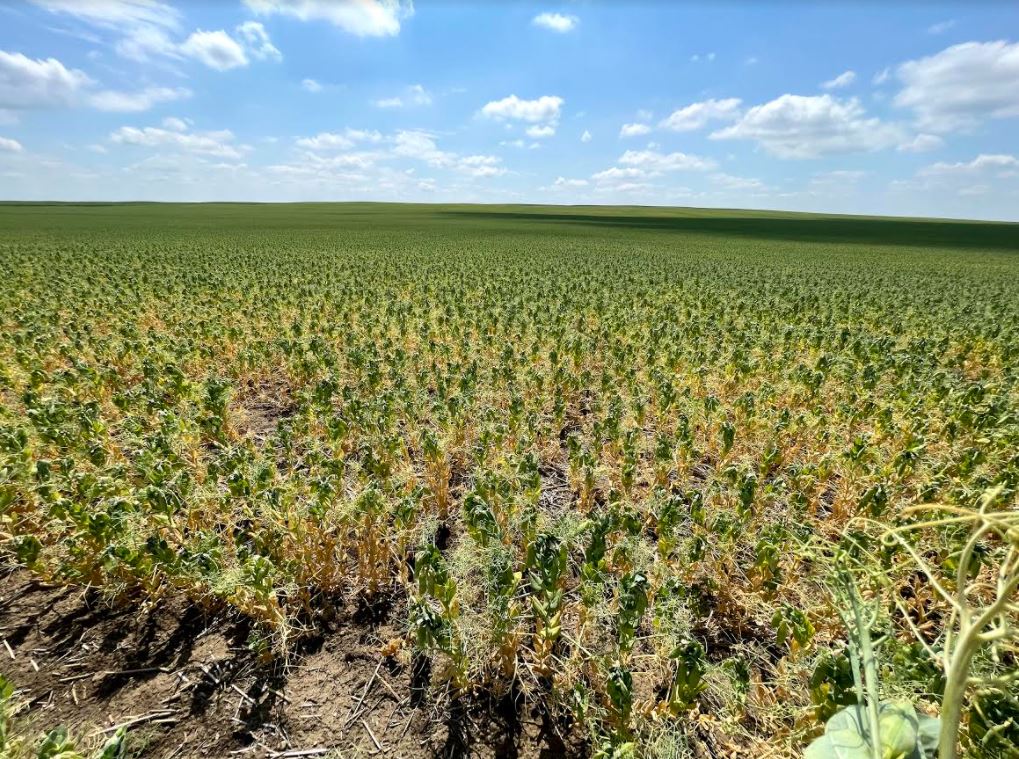
Pulse flowers blast in heat causing yield reductions across Alberta

Weather is challenging pulse growers across the province. Pulse crops handle a variety of trials with their life cycle and farmers have worked to mitigate some of them, but weather is out of the farmer’s control.

“Pulse crops are grown across Alberta and there is diversity in crop types like pea, lentil, faba bean, dry bean and chickpea,” said APG Chair Robert Semeniuk. “There is also variability in weather conditions in the province. The one common point is that yields of all pulses have been affected by the intense heat this summer.”

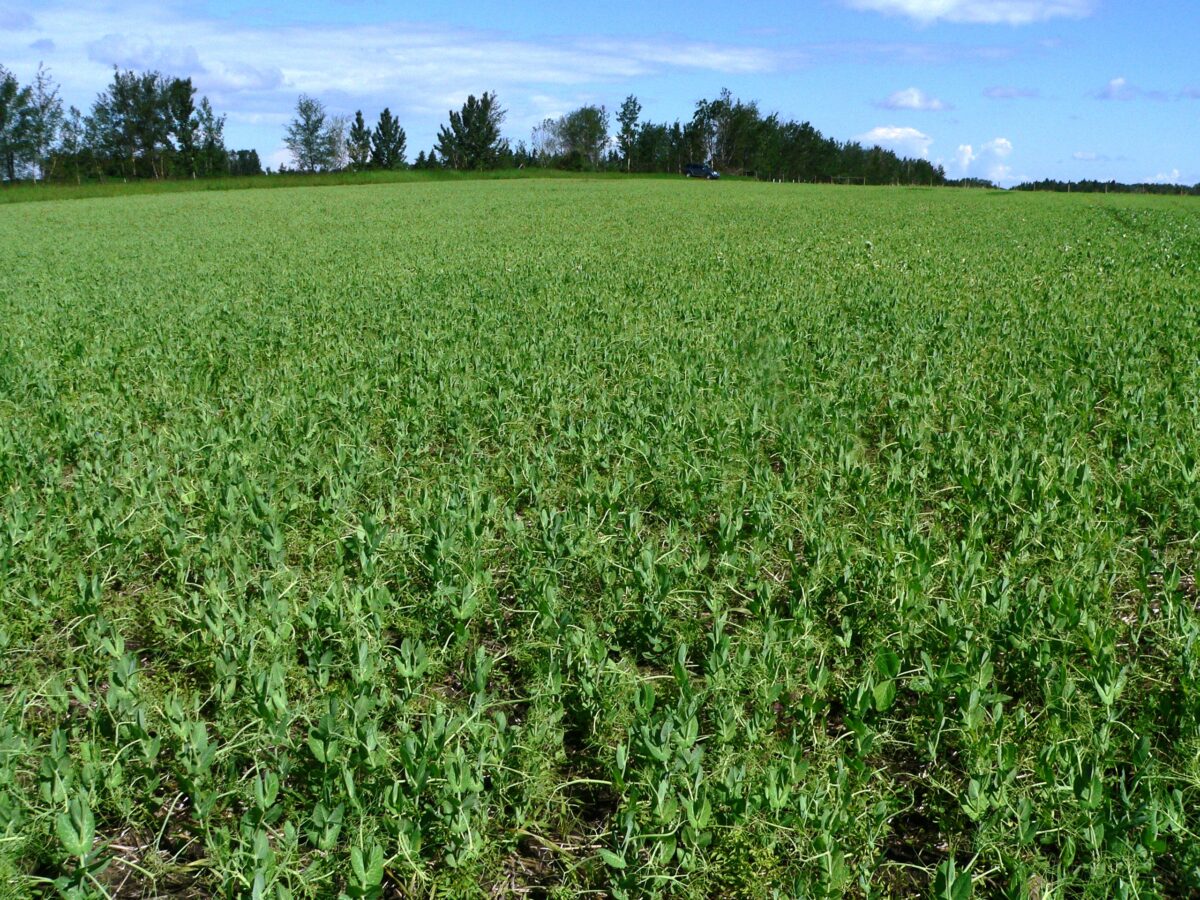
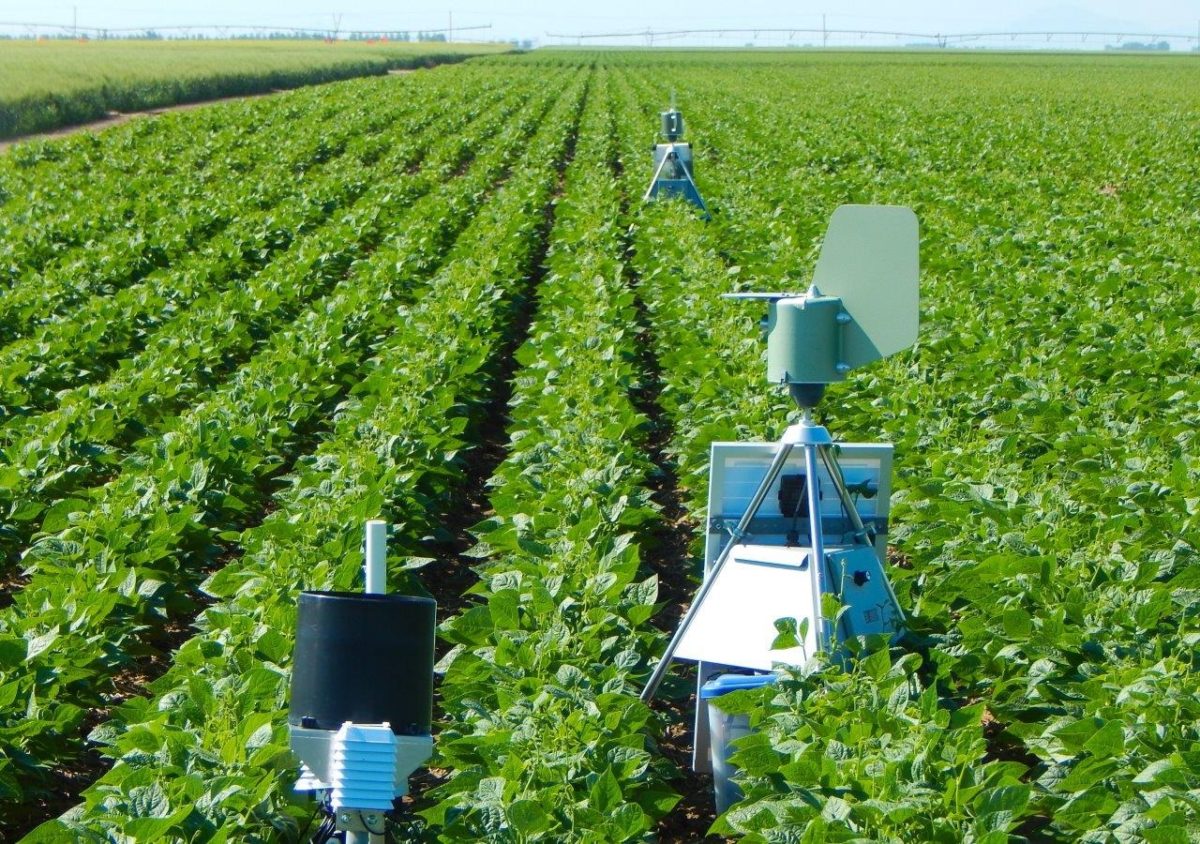
Typically, pulse crops like pea and faba bean are planted early in the spring enabling them to grow through their life cycle to harvest before many of the other crops on the farm. The benefit of early planting is that pulses will flower earlier starting mid-June and complete seed set around the end of July depending upon the cultivar. Harvest also progresses earlier being a benefit for farmers to have pulses in rotation on the farm. This year, the heat has been early and intense causing flowers to ‘blast’ or prematurely abort and not form a pod. By not forming a pod the plant cannot produce seeds and yield is affected.

“Abiotic stress, like that from heat and drought conditions or even excess moisture like in certain parts of the province last year, needs to be further researched for pulse crops,” said APG Research Manager Dr. Jenn Walker. “We are actively working with a team of scientists on methods and traits that help pulse crops mitigate these kinds of stresses. This future research work will provide solutions.”

With the weather effects being widespread and impacting many other crops, APG is reaching out to crop commission colleagues, the Government of Alberta and Agriculture Financial Services Corporation (AFSC) to discuss the repercussions of heat and lack of moisture and how to deal with the consequences.

The Alberta Pulse Growers Commission represents 6,500 growers of field pea, dry bean, lentil, chickpea, faba bean and soybean in Alberta. Our vision is to have Alberta pulses on every farm, on every plate.

For more information, please contact:
Rachel Peterson, Communications Coordinator
Phone: 780-986-9398 ext. 108
rpeterson@albertapulse.com
www.albertapulse.com

Team Alberta supports Minister Dreeshen’s focus on emergency discussions at the Federal-Provincial-Territorial meeting

Alberta’s major crop commissions who are members of Team Alberta fully support the Government of Alberta in pursuing options to deal with 2021 crop conditions due to the drought, including the potential to trigger the AgriRecovery program. Team Alberta met with Minister Dreeshen yesterday to emphasize the impact of heat and drought conditions on crops throughout the province. Farmers shared with the Minister the challenges that they are seeing in their parts of the province and communicated messages from their commission colleagues around Alberta.

Team Alberta supports the Minister highlighting a discussion on triggering Agriculture and Agri-Food Canada’s AgriRecovery at the Federal-Provincial-Territorial meeting being held today. Drought conditions qualify under AgriRecovery as a disaster and must be proven to be a collective experience, across a defined area, region or province, as well as have potential for significant impacts on the sector. AgriRecovery events result in extraordinary costs directly related to resumed production or impact mitigation. In 2002, Alberta experienced severe drought and AgriRecovery was triggered amounting to a payout of over $800 million.

Messages to the Minister also included the need to immediately activate Agriculture Financial Services Corporation (AFSC) adjusters in an expeditious manner and support the evaluation of heat and drought impacts. AFSC is also encouraged to keep in mind flexibility in outcomes for farmers during this stressful time. Many crops in major areas across the province are wiped out from heat and wind, and expectations are that yields will be measurably impacted.

Team Alberta recognizes that this weather event is impacting multiple areas of the province and all crops. Team Alberta colleagues, Alberta Sugar Beet Growers and Potato Growers of Alberta, also support the Minister in his message at the FPT meetings. Continuation of dialogue between Team Alberta members, the Minister and AFSC will be taking place over the summer while monitoring the impacts of this significant weather event.

Media Requests:

Rachel Peterson, Communications Coordinator
Alberta Pulse Growers
rpeterson@albertapulse.com
780-986-9398 ext. 108

Michelle Chunyua, Communications Coordinator
Alberta Canola
michelle@albertacanola.com
780-454-0844

Erin Tateson, Interim Communications Manager
Alberta Wheat and Barley Commissions
etateson@Albertawheatbarley.com
403-219-7902


RDAR funds landmark agriculture water stewardship and monitoring project

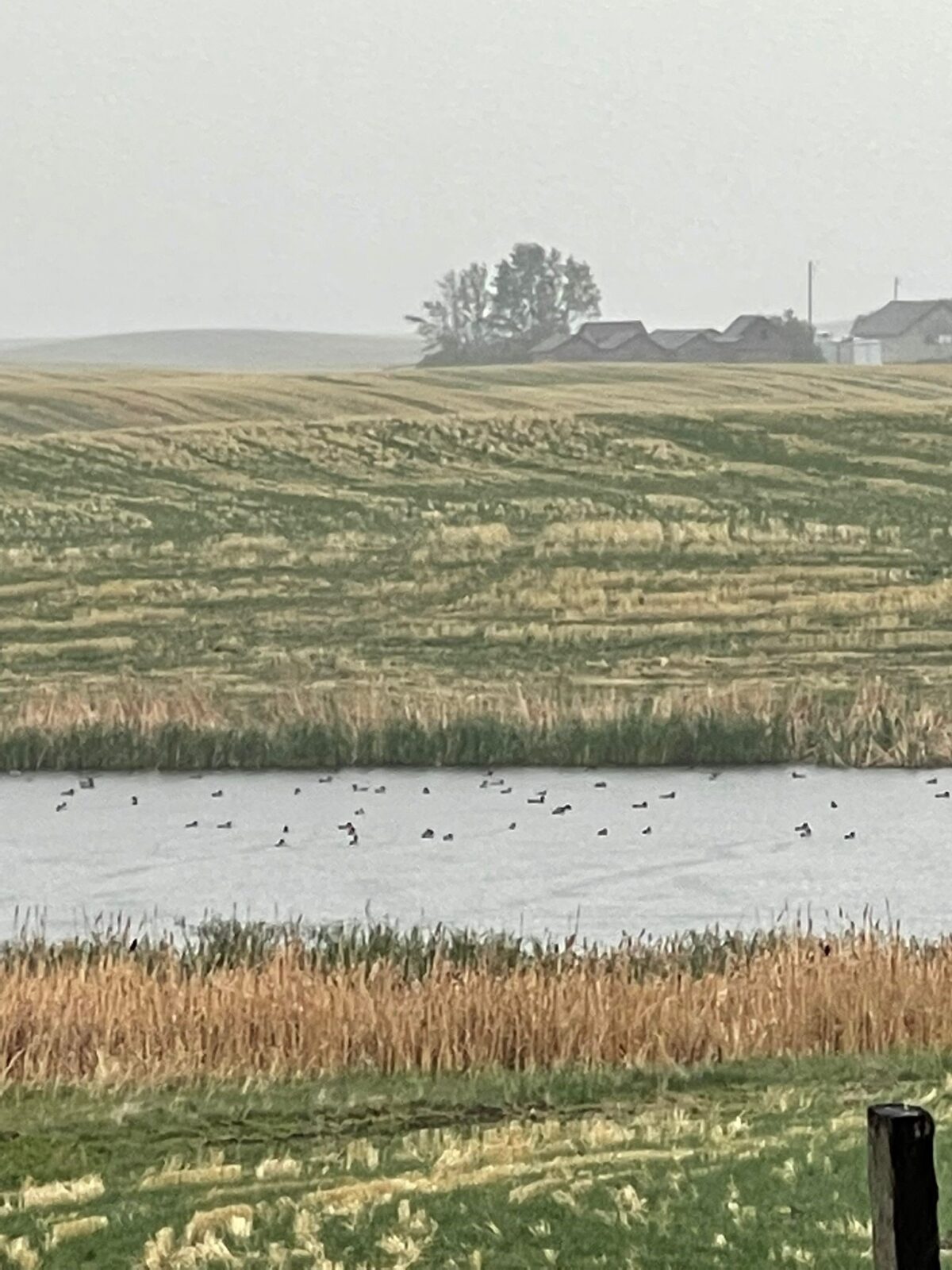
Results Driven Agriculture Research (RDAR) has invested funds in a collaborative project by Alberta’s producer-led Crop Sector Working Group (CSWG) and three major life-science companies. The novel water monitoring project will help ensure that farmers have access to innovative crop protection tools while upholding sound environmental stewardship. The project aims to gather scientific data to evaluate the effectiveness of wetland management practices in mitigating the movement of crop protection products into wetlands and aquatic ecosystems. RDAR’s funding contributions – of which $417,500 comes from the Canadian Agricultural Partnership (CAP) – are valued at $750,000 over three years.

The ground-breaking project highlights a cooperative and proactive approach being utilized by agriculture industry partners with funding support from RDAR to make it possible. From this research, best management practices will be developed to protect water habitats from crop protection product use while providing substantive knowledge transfer and translation to producers.

“As a farmer, I take great pride in being a steward of the land and that includes our waterways,” says Don Shepert, CSWG Chair. “The data collected from this project will give farmers a better understanding how stewardship practices can be further employed and adopted to continue to prevent the movement of crop protection products in the environment.”

The project was developed in close collaboration with the Health Canada regulator, the Pest Management Regulatory Agency (PMRA), which requires science-based data to support their regulatory evaluation and re-evaluation decisions. Data collected from this project will ensure there’s a representative set of western Canadian data available for regulatory bodies such as the PMRA. It will ensure that fulsome decisions can be made based on accurate use and application of crop protection products, which could lead to the retention of valuable crop protection tools that farmers rely on to be competitive globally.

“The collection of on-farm data in this project will increase the quality and relevance of information that can be used to inform policy and regulatory guidelines for crop protection product use, which are more realistic than laboratory data,” says Dr. David Chalack, RDAR Board Chair. “Collaboration is in our DNA. This landmark project brings together producers, researchers, commissions, and national regulatory bodies, all dedicated to supporting the success and sustainability of Alberta’s agriculture industry.”

RDAR is pleased with the collaborative model of this project and the level of interest across the industry. Partners providing matching funds to the project include Syngenta, BASF, Bayer Crop Science – Canada, the Alberta Wheat Commission, Alberta Barley, Alberta Canola, Potato Growers of Alberta, Alberta Sugar Beet Growers, and Alberta Pulse Growers.

With a focus on southern Alberta, more than 10 producers have now signed up to participate in the sampling of wetlands on their private land. The data collection and analysis are being conducted by a third-party contractor, Millennium EMS Solutions.

The Canadian Agricultural Partnership is a five-year, $3 billion investment by Canada’s federal, provincial and territorial governments to strengthen and grow Canada’s agri-food and agri-products sectors. This commitment includes $2 billion for programs cost-shared by the federal and provincial/territorial governments that are designed and delivered by provinces and territories.

Alberta’s Crop Sector Working Group is an inclusive partnership of nine crop sector commissions and associations that have come together to consider and discuss agri-environmental issues relating to the crop sector. The CSWG consists of Alberta Barley, Alberta Beekeepers Commission, Alberta Canola, Alberta Potato Growers, Alberta Pulse Growers, Alberta Seed Growers, Alberta Sugar Beet Growers, Alberta Wheat Commission and the Alfalfa Seed Commission – Alberta.

RDAR is a not-for-profit organization that will continually consult with Alberta’s crop and livestock producers to set research priorities and distribute funds. Its mandate is: to support results driven agriculture research priorities and programs that will increase competitiveness and profitability of Alberta’s agriculture industry. Arm’s length from the provincial government, RDAR is funded by two sources: The Government of Alberta, and the Government of Canada and the Government of Alberta through the Canadian Agricultural Partnership. 

For more information on the project, please contact:

Shannon Sereda
Senior Manager, Government Relations and Policy
Alberta Wheat and Barley Commissions
403-219-6263
ssereda@albertawheatbarley.com

For media inquiries, please contact:

Results Driven Agriculture Research Contact:
Janada Hawthorne
Communications Lead
Results Driven Agriculture Research
780-903-2734
janada.hawthorne@rdar.ca 

Crop Sector Working Group Contact:
Erin Tateson
Interim Communications Manager
Alberta Wheat and Barley Commissions
403-219-7902
etateson@albertawheatbarley.com

2021 Keep It Clean Product Advisory Now Available Online

Keep it Clean has released its 2021 Product Advisory to inform Canadian growers of market risks associated with certain crop protection products when used on some crops. The Keep it Clean initiative, which includes the Canola Council of Canada, Cereals Canada and Pulse Canada, updates this list annually as part of its effort to ensure growers and their advisors are aware of the impact certain crop protection products can have on market access.

“The Keep it Clean advisory is an important resource for growers to ensure our crop stays export ready,” says Corey Loessin, a pulse, cereal and canola grower from Radisson, Sask., who also serves as Chair of Pulse Canada. “This advisory provides timely, relevant information on products that may pose a marketing risk for each major crop type, all in one place.”

Growers are encouraged to review the 2021 Keep it Clean Product Advisory at keepitclean.ca/product-advisory to learn which products may restrict marketing opportunities for their cereals and pulse crops.

Product/crop types included in the advisory to be aware of this year include:

  • Chlormequat – “be informed” for use on malt barley.
  • Chlorothalonil – “be informed” for use on chickpeas.
  • Glufosinate – “do not use” on lentils and “be informed” for use on dry beans.
  • Glyphosate – “be informed” for use on wheat, oats and pulses; “do not use” on malt barley.
  • Saflufenacil – “do not use” on malt barley.

Experts from Keep it Clean and the Canada Grains Council are hosting a webinar on Thursday, April 29 at 11 a.m. CDT. (10 a.m. CST/MDT) to provide more detail on the crop protection products that may create market risk and to answer growers’ questions during a live Q&A session that will follow the speakers.

As an export-driven industry, the success of Canadian agriculture depends on steady and predictable access to major international markets and crop protection product application decisions are an important part of that.

Fred Grieg, who grows barley, canola, corn, flax, oats, peas, soybeans, sunflowers and wheat near Reston, Man., says it is important to think about market implications of crop inputs and other decisions before seeding begins.

“Before you even seed, it is important to understand where you’re selling that end product and how decisions you are making may restrict how you market it,” says Grieg. “My family has kids involved in the farm now. To be good stewards, moving forward especially, I think we’ve got even more reason to not restrict any of our markets.”

Keep it Clean encourages growers to review the 2021 Product Advisory, and to consult with their grain buyer before making product applications for the 2021 growing season to ensure the products they plan to apply are acceptable to the customers of Canadian agriculture commodities.

View the 2021 Product Advisory at https://keepitclean.ca/product-advisory.

Keep it Clean is a joint initiative of the Canola Council of Canada, Pulse Canada, Cereals Canada, Barley Council of Canada and Prairie Oat Growers Association, providing growers and advisors with resources for growing crops that meet the requirements of our domestic and export customers.

To request an interview, please contact:

Jeff English

Vice President, Marketing & Communications
Pulse Canada
Ph: (204) 925-3787
jenglish@pulsecanada.com

To view a pdf of the full release, please click here.

Alberta producers welcome the consensus on AgriStability proposal, long-term BRM solutions remain needed

Following today’s Federal-Provincial-Territorial (FPT) meeting, 11 of Alberta’s producer organizations are pleased the Ministers of Agriculture have come to a consensus on part of the proposed changes to AgriStability, which includes the removal of the reference margin limit, retroactive to 2020, and extending the program enrollment deadline to June 30, 2021. The producer organizations thank Minister Dreeshen, alongside provincial and territorial counterparts, for coming to an agreement on the proposal.

The federal government proposed changes to AgriStability on November 27, 2020, which included the removal of the reference margin limit and increasing the compensation rate from 70 per cent to 80 per cent, adding $170 million dollars to the AgriStability program nationally. Today’s announcement includes $95 million of interim improvements to AgriStability that will benefit Canadian farmers and ranchers over the next two years leading up to the renewal of the next policy framework in 2023.

While today’s news is welcomed, Alberta’s producer organizations understand a decision to increase the compensation rate from 70 per cent to 80 per cent was not agreed and remains open for discussion. This portion of the federal offer includes an additional $75 million per year of support for Canadian producers. We continue to encourage the provincial and territorial Ministers to consider accepting this part of the proposal, bringing additional support to Canadian farmers and ranchers.

Alberta’s producer organizations appreciate the provincial and federal governments coming to a consensus and extending this year’s AgriStability enrollment deadline from April 30 to June 30. Today’s decision gives farmers and ranchers an enhanced AgriStability program that will inevitably increase enrollment and increase payouts to producers in the short-term.

This press release is written collaboratively by a number of Alberta’s agriculture producer and commodity groups including Alberta Barley, Alberta Beef Producers, Alberta Beekeepers, Alberta Canola, Alberta Cattle Feeders’ Association, Alberta Federation of Agriculture, Alberta Pork, Alberta Pulse Growers, Alberta Sugar Beet Growers, Potato Growers of Alberta and Alberta Wheat Commission. These 11 groups represent a cross-section of Alberta’s diverse agriculture industry.

Media Contacts:

For crops media inquiries: 
Erin Tateson
Interim Communications Manager
Alberta Wheat and Barley Commissions
etateson@albertawheatbarley.com
403.219.7902

For livestock media inquiries:
Katelyn Laverdure
Lead, Stakeholder Communications
Alberta Beef Producers
katelynl@albertabeef.org
403.561.8578

For beekeepers media inquiries:
Connie Phillips
Executive Director
Alberta Beekeepers Commission
connie.phillips@albertabeekeepers.ca
780.289.5604

Click here for a pdf of this release.

Team Alberta concerned of the economic sustainability of farming in response to Supreme Court ruling

Following this morning’s Supreme Court of Canada ruling affirming the constitutionality of the federal carbon tax, Team Alberta is calling on the Government of Alberta to take a leadership role in creating a ‘Made in Alberta’ climate plan that will ensure the economic sustainability of Alberta farmers.

Team Alberta – a collaboration of Alberta Barley, Alberta Canola, Alberta Pulse Growers and the Alberta Wheat Commission – notes that without offsetting measures Canadian farmers will become uncompetitive in international markets due to a carbon tax, which is set to reach $170 per tonne by 2030. In turn, this threatens the affordability of Canada’s domestic food supply. Roughly 80 per cent of Alberta’s crop production is exported.

The crop sector has made significant contributions to the reduction of greenhouse gas (GHG) emissions through the adoption of minimum tillage and precision farming practices. Western Canadian crop farmers have continually enriched their agricultural soils. Since the year 2000, Alberta soils have sequestered more carbon than emitted. Additionally, the Alberta Conservation Cropping Protocol is set to expire at the end of 2021, which removes one of the few programs that acknowledges farmers for their positive contributions to the environment. Team Alberta insists the provincial government collaborates on the creation of a new Soil Carbon Enhancement Protocol so farmers can be compensated for the carbon they continue to sequester through soil stewardship.

A price on carbon that is embedded in a wide range of crop inputs and the cost of transporting those commodities to market, will put the livelihoods of Alberta farmers in jeopardy. Currently, the provincial and federal governments have climate plan consultations in progress, and Team Alberta encourages both governments to include agriculture as a vital industry that is part of the climate change solution, while ensuring the economic viability of Canada’s food production.

In January 2020 – in the absence of a federally approved provincial plan – the federal carbon tax backstop was imposed in Alberta. The tax is currently at $30 per tonne and is expected to climb until it hits $170 tonne in 2030. Based on Team Alberta calculations, the carbon tax will exceed the cost of the propane and natural gas used to operate grain dryers within the next two years.

Media Contacts:

Erin Tateson
Interim Communications Manager
Alberta Wheat and Barley Commissions
403-219-7902
etateson@albertawheatbarley.com

Michelle Chunyua
Communications Coordinator
Alberta Canola
780-454-0844
michelle@albertacanola.com

Rachel Peterson
Communications Coordinator
Alberta Pulse Growers
780-986-9398 ext. 108
rpeterson@albertapulse.com

Click here to see a pdf of this release.

Alberta producer organizations encourage the Government of Alberta to accept the current AgriStability proposal

Following this morning’s statement by the Honourable Marie-Claude Bibeau and the Honourable Jim Carr on the federal government’s proposed improvements to AgriStability, 11 of Alberta’s agriculture commodity and producer groups are requesting the Government of Alberta to accept the proposed changes.

Alberta’s producer groups agree the changes will provide immediate improvements to the program for producers’ benefit. While they recognize the proposal is not a long-term solution, these improvements offer interim changes while working towards long-term enhancements to the suite of business risk management (BRM) programs.

Alberta’s producer groups express urgency on the matter as the April 30, AgriStability enrollment deadline nears. Accepting the current proposal would offer Alberta’s producers meaningful changes that will serve as a bridge to the next policy framework in 2023.

On November 27, 2020, the federal government proposed changes to the AgriStability program by removal of the reference margin limit and increasing the compensation rate from 70 per cent to 80 per cent, adding $170 million dollars to the AgriStability program nationally.

Alberta’s producer groups have supported the proposed changes in the short-term while expressing the need for long-term enhancements to BRM programs for Canadian agriculture producers. Alberta producers are looking for clarity and collaboration between the provincial and federal governments to heighten the effectiveness of the current BRM tools available to them.

This press release is written collaboratively by a number of Alberta’s agriculture producer and commodity groups including Alberta Barley, Alberta Beef Producers, Alberta Beekeepers, Alberta Canola, Alberta Cattle Feeders’ Association, Alberta Federation of Agriculture, Alberta Pork, Alberta Pulse Growers, Alberta Sugar Beet Growers, Potato Growers of Alberta and Alberta Wheat Commission. These 11 groups represent a cross-section of Alberta’s diverse agriculture industry.

Media Contacts

For crops media inquiries:

Erin Tateson

Interim Communications Manager

Alberta Wheat and Barley Commissions

etateson@albertawheatbarley.com
403.219.7902


For livestock media inquiries:

Katelyn Laverdure

Lead, Stakeholder Communications

Alberta Beef Producers

katelynl@albertabeef.org

403.561.8578


For beekeepers media inquiries:

Connie Phillips

Executive Director

Alberta Beekeepers Commission

connie.phillips@albertabeekeepers.ca

780.289.5604

APG Commits $1.06 Million to Research Projects Tackling Major Issues Affecting Pulse Farmers

The Alberta Pulse Growers Commission (APG) recently approved investments worth $1.06 million for research projects to work on issues that impact farmers the most, including Aphanomyces root rot, wireworm and pea leaf weevil.

“Research funded by this $1.06 million investment of grower dollars is expected to improve the bottom line for Alberta farms,” said APG Chair Robert Semeniuk. “All of the projects focus on objectives of APG’s new strategic plan by addressing issues in agronomy, breeding options and marketing.”

Funding for eight research projects was approved by APG’s Board of Directors at its January meeting. The commitments will support six agronomic projects, one breeding project and one in the area of marketing and health.

Most of the projects involve funding commitments of two to three years in partnership with funding organizations including Western Grains Research Foundation (WGRF), Agriculture Development Fund (ADF) and the new Results Driven Agriculture Research (RDAR) or with other pulse and wheat commissions.

The agronomic projects will allow more work to be done with wireworm and pea leaf weevil, which are two challenging pests that impact yields for Alberta farmers. The Aphanomyces investment allows research to continue into management practices to allow for control through liming of soils and additional work in root rot detection.

In addition to the agronomy work on Aphanomyces, APG is pleased to be investing in pea breeding for disease resistant varieties. APG is also investigating new pulse crop opportunities in lupin agronomy. The marketing project focuses on incorporating beans for healthy aging.

The Alberta Pulse Growers Commission represents 6,500 growers of field pea, dry bean, lentil, chickpea, faba bean and soybean in Alberta. Our vision is to have Alberta pulses on every farm, on every plate.

For more information, please contact:
Rachel Peterson, Communications Coordinator
Phone: 780-986-9398 ext. 108
rpeterson@albertapulse.com
www.albertapulse.com

Nominations Open for 2022 Pulse Industry Innovator Award

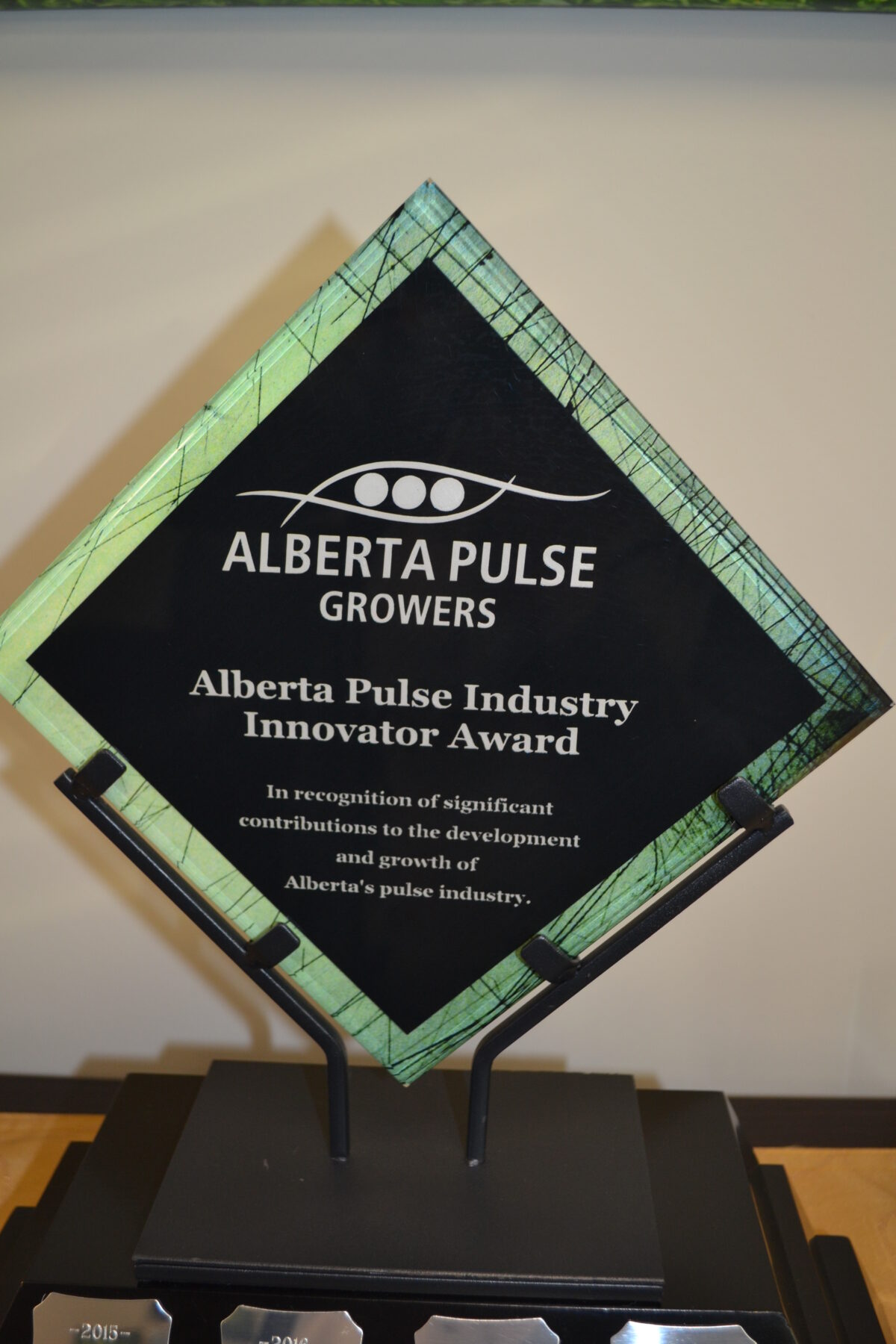
The Alberta Pulse Growers Commission is pleased to announce the eighth annual Alberta Pulse Industry Innovator Award. An industry innovator is a person or organization that has worked to help nurture and shape the pulse industry and has helped contribute to the success of the industry as it is today. Innovators may have contributed to the industry through various areas from production, marketing, research, extension, processing, management, promotion and innovation.

To nominate someone, please complete the Pulse Industry Innovator Nomination Form below.

Nominations may be forwarded to the APG office and will be accepted until December 11, 2021.

2022 Alberta Pulse Industry Innovator Award Nomination Form

APG’s New Chair Excited to Work with New Board Towards Pulses on Every Farm, On Every Plate

The new Chair of the Alberta Pulse Growers Commission (APG) is keen to work with the new and experienced members of the Board of Directors to achieve the vision of pulses on every farm, on every plate.

Robert Semeniuk of Smoky Lake was elected to the role of Chair following this week’s virtual annual general meeting. He took over the position from St. Brides’ Don Shepert, who becomes Past Chair.

“I’m looking forward to continuing the great work this Board has started under Don’s leadership to maximize opportunities for Alberta’s pulse farmers,” Semeniuk said. “Beans, peas, lentils, chickpeas and soybeans have a fantastic sustainability, economic and health story to tell. I’m looking forward to sharing news about more successes in the near future.”

Semeniuk grows yellow peas and other crops alongside his wife Angela. He served as APG’s Vice-Chair for the last two years and as Zone 5 Chair prior to joining the provincial Board.

He will lead an Executive Committee that includes new Vice-Chair Chris Allam of Ardrossan (Zone 3) and Shepert (Zone 5).

Kevin Auch of Carmangay (Zone 2) and Shane Strydhorst of Neerlandia (Zone 3) join APG as Directors on the 12-member Board. They will join continuing Directors Greg Stamp of Enchant, Rodney Volk of Burdett and Will Muller of Bow Island (Director-at-Large, Bean) in Zone 1; Allison Ammeter of Sylvan Lake in Zone 2; as well as Jerome Isaac of Crooked Creek, Caroline Sekulic of Rycroft and Peter Konstapel of Spirit River (Director-at-Large, Non-Bean) in Zone 4.

Outgoing Directors Kelisha Archer in Zone 2 and Dan Visser in Zone 3 were thanked for their service at the annual general meeting. Shepert and Isaac were also recognized for their service in the roles of Chair and Third Executive Member respectively.

The Alberta Pulse Growers Commission represents 6,500 growers of field pea, dry bean, lentil, chickpea, faba bean and soybean in Alberta.

For more information, please contact:
Rachel Peterson, Communications Coordinator
Phone: 780-986-9398 ext. 108
rpeterson@albertapulse.com
www.albertapulse.com